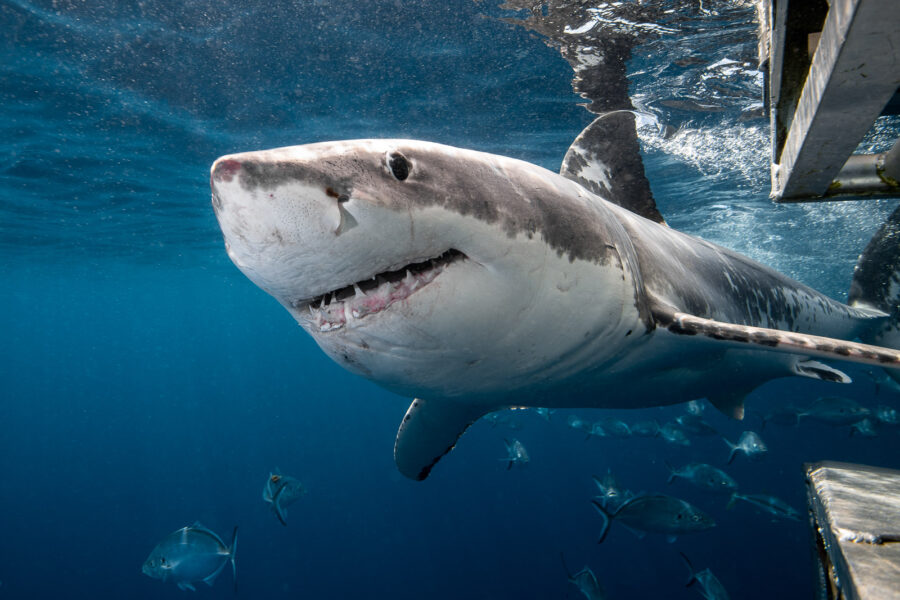
Great White Shark Portrait
This great white shark photo (Carcharodon carcharias) was shot under dark skies, in early morning. These are tough conditions to shoot underwater with only available light. I prefer to shoot without strobes whenever possible but in the days of film this particular morning would have required I use artificial lights. Digital cameras, however, have changed all that and allow shooting in dark and flat lighting conditions that film did not. I hope to get back down to Guadalupe Island later this year to reshoot these sharks with the current cameras I am using (5D Mark III and D800). I think I have made 15 trips to the island (I’ve lost count) and I never get tired of Isla Guadalupe. Cheers and thanks for looking!
![]() |
| Great white shark, underwater. Image ID: 21360 Species: Great white shark, Carcharodon carcharias Location: Guadalupe Island (Isla Guadalupe), Baja California, Mexico |
Whale Triple Header: Blue Whales, Humpback Whales, Fin Whales, Del Mar, California
GREAT WHALE TRIPLEHEADER. What’s that you say? Read on…
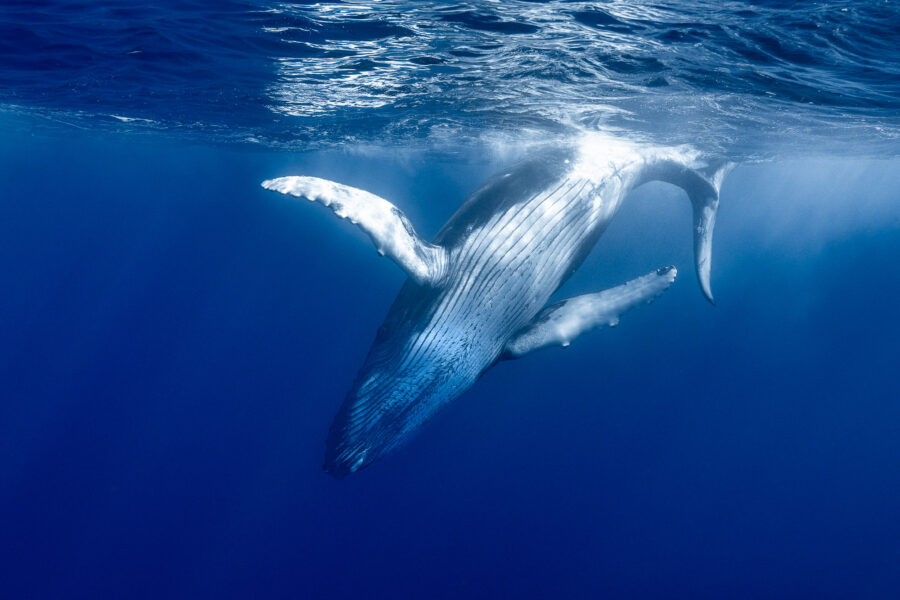
This is a photograph of a humpback whale (Megaptera novaeangliae) performing a peduncle throw (or “tail throw”, or “tail lob”). The man who taught me most of what I know about whales, friend and whale researcher Dr. Dan Salden, often referred to this behavior as a “peduncle throw” and that is the term I prefer to use but whale watching captains will call it all sorts of names. The whale pivots around its long pectoral fins, dips its rostrum (head) down and violently catapults its peduncle and fluke high out the water, throwing a mighty cascade of spray throughout the air. What a sight! I remember my first season working with Dan’s whale research team, seeing this behavior for the first time, and having him explain to me what he thought might be going on underwater that would motivate the whale to do such a thing. In this case the whale was apparently alone and had been doing it for some time. We saw the splashing from over a mile away and drove over to take a closer look. I never did see any other animals in the vicinity of this whale and could not figure out why it was breaching, peduncle throwing and tail slapping.
![]() |
| A humpback whale raises it fluke out of the water, the coast of Del Mar and La Jolla is visible in the distance. Image ID: 27142 Species: Humpback whale, Megaptera novaeangliae Location: Del Mar, California, USA |
The campus of UCSD is seen high on the bluffs in the distance. When I was in college I would to gaze out the windows of those building during class, staring at the ocean and hang gliders that would fly past. The humpback remained surface active for a while, and later transitioned to fluke slapping and inverted tail lobs:
![]() |
| A humpback whale raises it fluke out of the water, the coast of Del Mar and La Jolla is visible in the distance. Image ID: 27130 Species: Humpback whale, Megaptera novaeangliae Location: Del Mar, California, USA |
This humpback was just part of a rare GREAT WHALE TRIPLEHEADER, in which we shot photographs underwater of three different species of great whales: blue whales, humpback whales and fin whales.
It was quite a day to say the least. Here are a few of the non-humpbacks we saw that day. Check out the fin whale, his buddy can be seen in the distance just beyond him, identifiable by the lightly colored lower right side jaw that is characteristic of fin whales. Also check out the bizarre fluke on this blue whale, with the bluffs of Del Mar in the distance.
![]() |
| Fin whale underwater. The fin whale is the second longest and sixth most massive animal ever, reaching lengths of 88 feet. Image ID: 27597 Species: Fin whale, Balaenoptera physalus |
![]() |
| Blue whale fluking up (raising its tail) before a dive to forage for krill. Image ID: 27119 Location: La Jolla, California, USA |
![]() |
| Blue whale fluking up (raising its tail) before a dive to forage for krill. Image ID: 27122 Location: La Jolla, California, USA |
![]() |
| Fin whale underwater. The fin whale is the second longest and sixth most massive animal ever, reaching lengths of 88 feet. Image ID: 27594 Species: Fin whale, Balaenoptera physalus |
We finished the day with a great sunset of Mount Soledad on our way back to Mission Bay. One of those “top 10 days”.
![]() |
| Panorama of La Jolla, with Mount Soledad aglow at sunset, viewed from the Pacific Ocean offshore of San Diego. Image ID: 27086 Location: La Jolla, California, USA Pano dimensions: 3144 x 55857 |
End of the World Pelicans
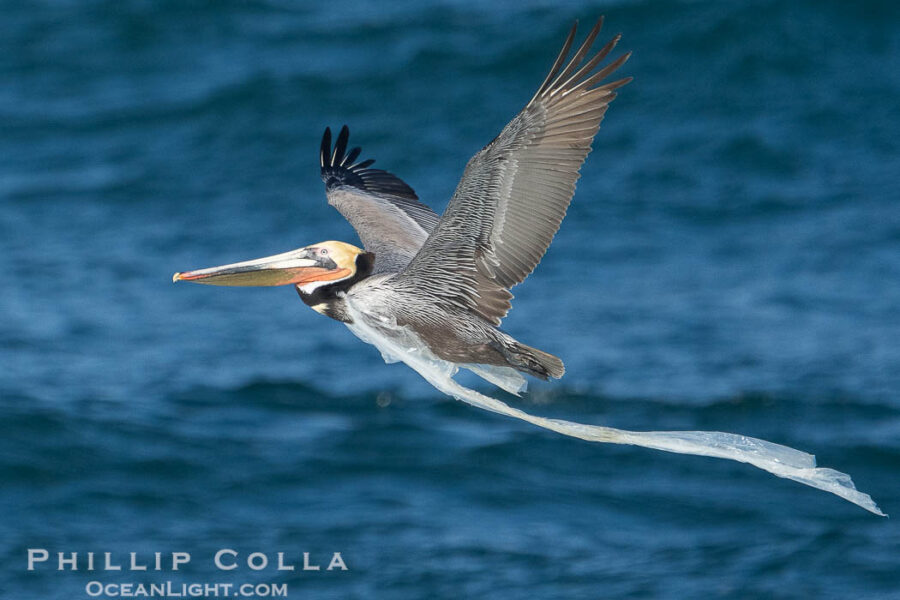
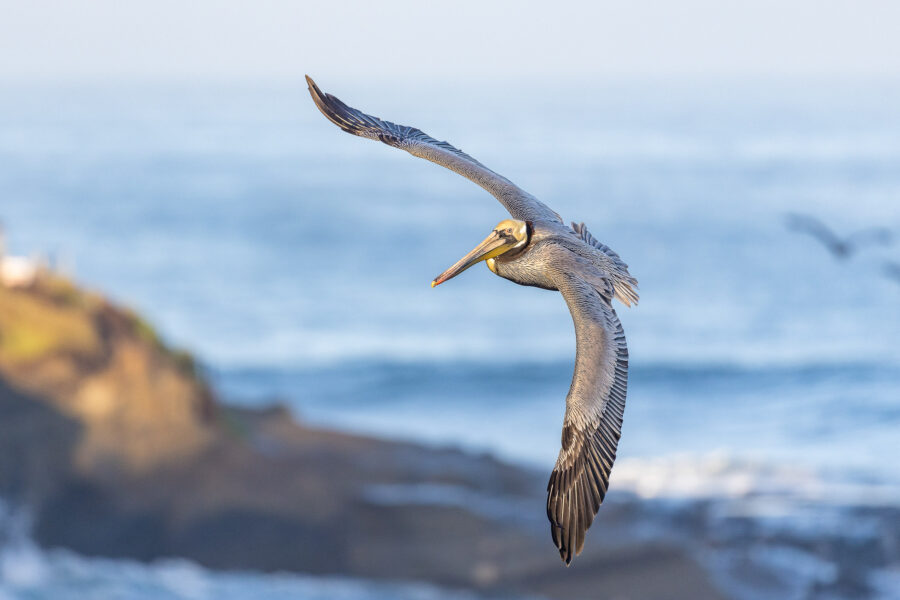
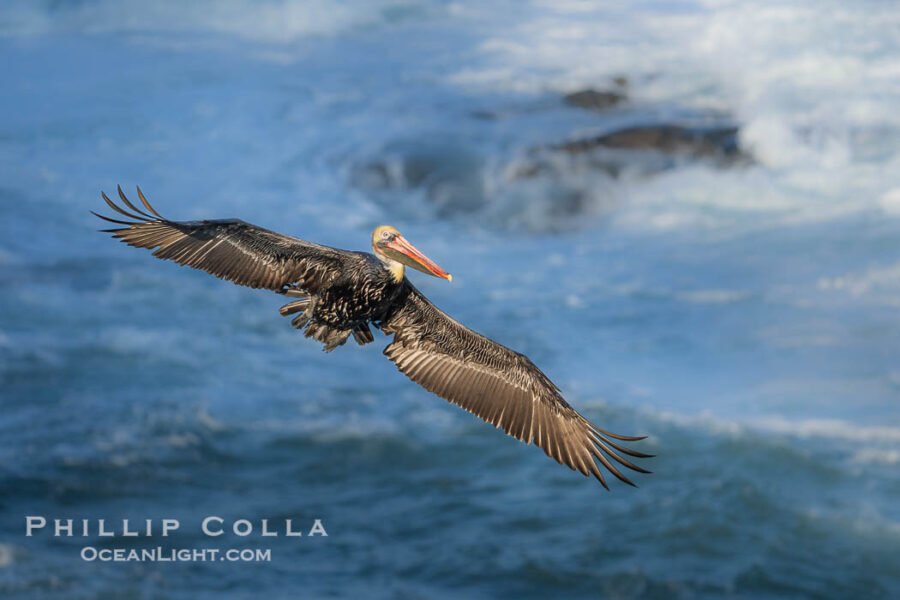
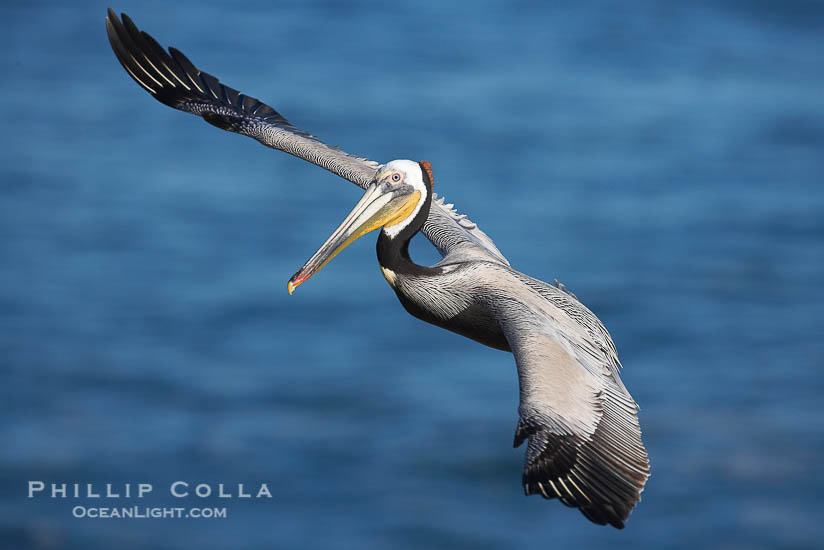
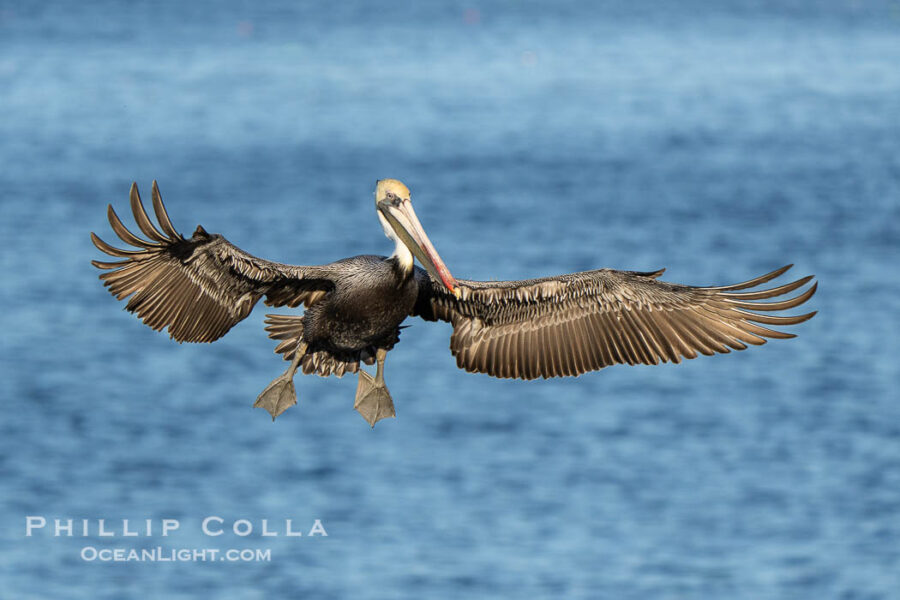
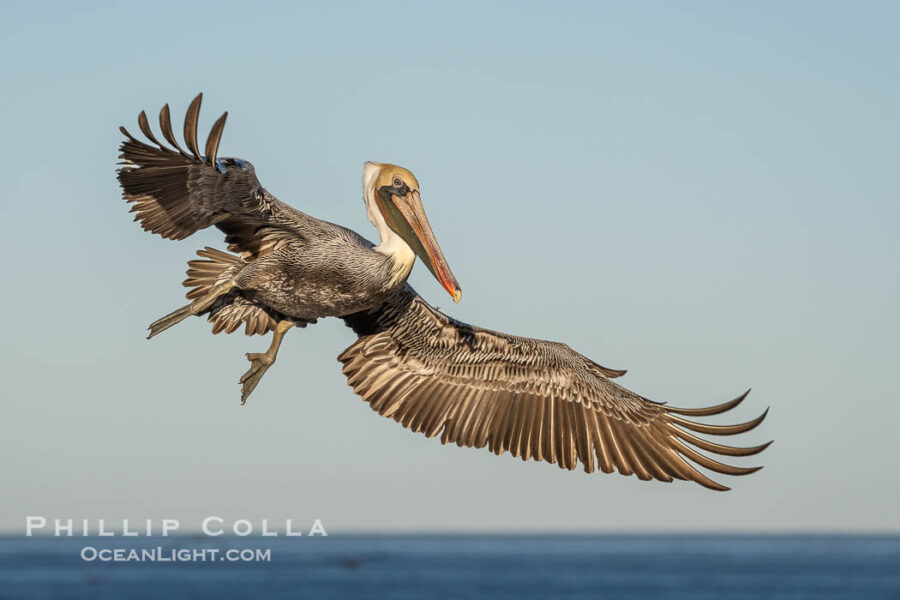
I figured the Mayan World’s End is coming soon, so I would go photograph some pelicans before it was all over. Here are a few new photographs of brown pelicans (Pelecanus occidentalis californicus). Cheers, and thanks for looking!
![]() |
| Brown pelican in flight. The wingspan of the brown pelican is over 7 feet wide. The California race of the brown pelican holds endangered species status. In winter months, breeding adults assume a dramatic plumage. Image ID: 28356 Location: La Jolla, California, USA |
![]() |
| Brown pelican in flight. The wingspan of the brown pelican is over 7 feet wide. The California race of the brown pelican holds endangered species status. In winter months, breeding adults assume a dramatic plumage. Image ID: 28357 Location: La Jolla, California, USA |
![]() |
| Brown pelican in flight. The wingspan of the brown pelican is over 7 feet wide. The California race of the brown pelican holds endangered species status. In winter months, breeding adults assume a dramatic plumage. Image ID: 28351 Location: La Jolla, California, USA |
![]() |
| Western gull, early morning pink sky. Image ID: 28353 Location: La Jolla, California, USA |
![]() |
| Brown pelican in flight, spreading wings wide to slow in anticipation of landing on seacliffs. Image ID: 28354 Location: La Jolla, California, USA |
![]() |
| Brown pelican in flight. The wingspan of the brown pelican is over 7 feet wide. The California race of the brown pelican holds endangered species status. In winter months, breeding adults assume a dramatic plumage. Image ID: 28350 Location: La Jolla, California, USA |
![]() |
| Brown pelican in flight. The wingspan of the brown pelican is over 7 feet wide. The California race of the brown pelican holds endangered species status. In winter months, breeding adults assume a dramatic plumage. Image ID: 28352 Location: La Jolla, California, USA |
I’ve compiled my thoughts on photographing California brown pelicans in La Jolla in a PDF article.
If you like these photos, you can also see lots more blog posts from past sessions photographing California brown pelicans in La Jolla. Or, I’ve got a gallery of some keepers on my website, but most of the good ones from the last couple years I have not even gotten around to captioning and putting the web yet: California Brown Pelican photo gallery.
Brown Pelican and Belt of Venus
I set up to make photographs of brown pelicans (Pelecanus occidentalis californicus) in front of the thin pastel colors of the “belt of Venus”, or “Earth Shadow”, that forms just above the horizon at dawn and dusk when atmospheric conditions are favorable. If you can’t envision what the Belt of Venus looks like, check it out on this photograph of Earth Shadow over Morro Rock. Cheers and thanks for looking!
![]() |
| Brown pelican in flight, pink predawn sky. Image ID: 28346 Location: La Jolla, California, USA |
I’ve compiled my thoughts on photographing California brown pelicans in La Jolla in a PDF article.
If you like these photos, you can also see lots more blog posts from past sessions photographing California brown pelicans in La Jolla. Or, I’ve got a gallery of some keepers on my website, but most of the good ones from the last couple years I have not even gotten around to captioning and putting the web yet: California Brown Pelican photo gallery.
Braking to Land
This morning offered about 30 minutes of good light before the clouds took the sun away. Here are a few of photographs of brown pelicans (Pelecanus occidentalis californicus) returning from the ocean where they have been foraging for food, spreading their large wings wide as they brake to land on the sea cliffs above the cave. Cheers, and thanks for looking!
![]() |
| Brown pelican in flight, spreading wings wide to slow in anticipation of landing on seacliffs. Image ID: 28333 Location: La Jolla, California, USA |
![]() |
| Brown pelican in flight, spreading wings wide to slow in anticipation of landing on seacliffs. Image ID: 28336 Location: La Jolla, California, USA |
![]() |
| Brown pelican in flight, spreading wings wide to slow in anticipation of landing on seacliffs. Image ID: 28334 Location: La Jolla, California, USA |
![]() |
| Image ID: 28335 Location: La Jolla, California, USA |
![]() |
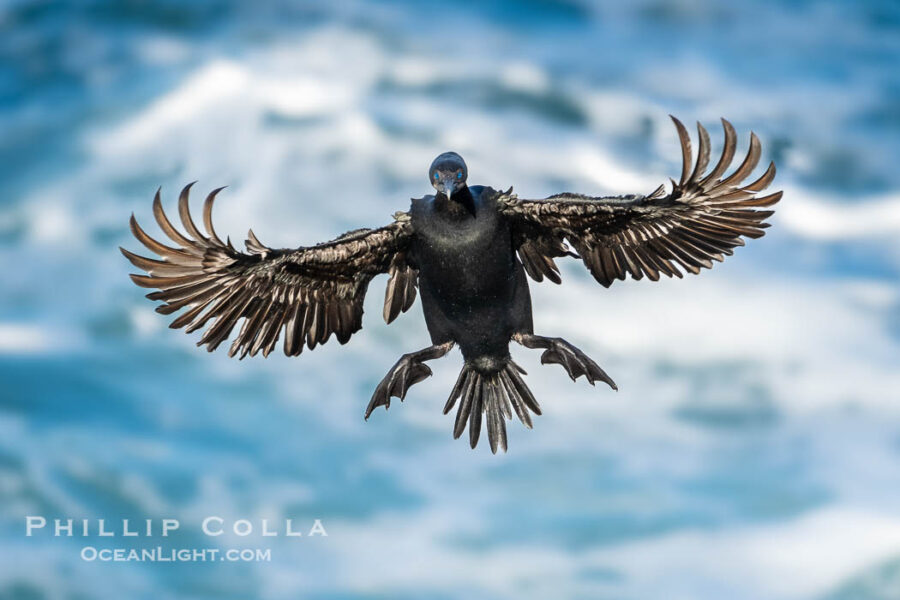
| Double-crested cormorants in flight at sunrise, long exposure produces a blurred motion. Image ID: 28339 Location: La Jolla, California, USA |
I’ve compiled my thoughts on photographing California brown pelicans in La Jolla in a PDF article.
If you like these photos, you can also see lots more blog posts from past sessions photographing California brown pelicans in La Jolla. Or, I’ve got a gallery of some keepers on my website, but most of the good ones from the last couple years I have not even gotten around to captioning and putting the web yet: California Brown Pelican photo gallery.
Testing Canon 5D Mark III on California Brown Pelicans in Flight
I took my Canon 5D Mark III down to La Jolla to photograph brown pelicans (Pelecanus occidentalis californicus) this morning. The auto-focus of this camera is the best I have ever owned among Canon bodies (1DsIII, 1DsII, 1DIIN, 5DII, 5D, 7D, 50D, 30D, 20D). I was very pleased with how sharp the images are and how many of them are in focus. Not just near-focus as we so often get with birds-in-flight photography, but dead-on razor-sharp-eye-in-focus images. I am not a bona fide bird photographer but I do enjoy photographing pelicans in La Jolla, having enjoyed watching them year-after-year since the early 1980’s. All of these were shot handheld with 300mm f/2.8 lens. This is a fine time of year to photograph these birds, before the holiday tourists and January photography-workshop-crowds arrive. I was alone for most of the morning, it was quiet and peaceful. Most of the birds are not yet at their peak winter plumage, but enough of them are that vibrantly-colored subjects can be easily found.
I’ve compiled my thoughts on photographing California brown pelicans in La Jolla in a PDF article.
If you like these photos, you can also see lots more blog posts from past sessions photographing California brown pelicans in La Jolla. Or, I’ve got a gallery of some keepers on my website, but most of the good ones from the last couple years I have not even gotten around to captioning and putting the web yet: California Brown Pelican photo gallery. Cheers, and thanks for looking!
![]() |
| Brown pelican in flight. The wingspan of the brown pelican is over 7 feet wide. The California race of the brown pelican holds endangered species status. In winter months, breeding adults assume a dramatic plumage. Image ID: 28328 Location: La Jolla, California, USA |
![]() |
| Brown pelican portrait, displaying winter plumage with distinctive yellow head feathers and red gular throat pouch. Image ID: 28332 Location: La Jolla, California, USA |
![]() |
| Brown pelican portrait, displaying winter plumage with distinctive yellow head feathers and red gular throat pouch. Image ID: 28329 Location: La Jolla, California, USA |
![]() |
| Brown pelican in flight. The wingspan of the brown pelican is over 7 feet wide. The California race of the brown pelican holds endangered species status. In winter months, breeding adults assume a dramatic plumage. Image ID: 28331 Location: La Jolla, California, USA |
Humpback Whale Breaching Near San Diego
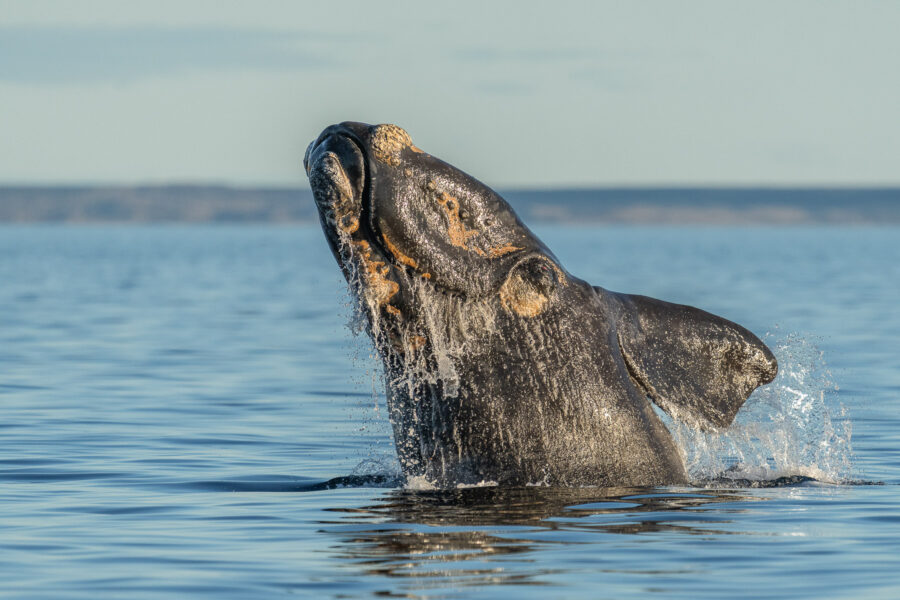
Humpback whales (Megaptera novaeangliae) are found throughout the worlds oceans, but seeing them near San Diego is somewhat unusual. Conventional wisdom has it that humpback whales in California are most often seen in the Channel Islands near Santa Barbara, as well as the central coast near Monterey Bay. However, if you put in enough time on the ocean anywhere in California, you will eventually see a humpback whale. Friend and fellow photographer Mike Johnson and I had a rare treat recently: a young humpback whale that was surface active for about an hour. It breached repeatedly, including performing head slaps, one peduncle throw, quite a bit of pectoral fin slapping and occasional trumpeting (deep rumbling sounds made while the whale is exhaling, or blowing, while at the surface between dives). You will notice live barnacles hanging from the whales chin when it breaches. These barnacles will die off when the whale reaches warm winter waters, and be reacquired when it returns to colder northern climes. Here are some fun photos from that hour.
|
|
|
|
|
|
|
Blue Whale Full Body Photo
For more, see Blue Whale Photos, Balaenoptera musculus
I made my first underwater photo of a blue whale (Balaenoptera musculus) about 18 years ago, and over the intervening years I have struggled to make a perfect image of an entire blue whale, rostrum to fluke, one with which I am entirely satisfied. This image of an adult blue whale underwater, which I made recently while out on the water with friend and fellow photographer Mike Johnson, is a good example.
|
This photograph illustrates the snake-like proportions of an adult blue whale as well as the curve of the upper lip bone (the largest single bone in the animal kingdom), the thin ridge on top of the rostrum that leads to the splash guard in front of the whale’s blowhole, and the curious skin mottling that characterizes the species. But technically this image has some problems, the sort that drive underwater photographers nuts. I do not exaggerate when I say trying to photograph an 80′ or longer animal underwater in typical California water conditions is a real challenge! The water is often cloudy or hazy, as can be seen in this image by a “glow” or “halo” that surrounds some of the brighter parts of the subject, particularly around the dorsal ridge and caudal area of the whale which are close to the surface and thus reflecting a great deal of light. With film this haloing was at once less objectionable but nearly impossible to deal with in post processing. With today’s digital tools, the computer operator can attempt to suppress the haloing somewhat but at the risk of adding too much artificiality to the image. So my decision is that it remains. Above water our eyes and lenses are accustomed to seeing things clearly in the range of miles. Underwater, our range of vision is crippled tremendously, measured in just feet. This begs the question: How does one photograph a subject whose dimensions are greater than the distance one can even see? For whales, water visibility must be excellent, 60′ or better, or else much of the leviathan is depicted without detail. In this image, note the whitewater at top left: it is the point where the blue whale left the ocean surface and began its underwater glide but, at about 120′ away, it is rendered with no detail at all. The leading 1/3 of the whale is sufficiently near the camera that it is rendered with plenty of detail, but is not so close that it is distorted by the fisheye lens I was using. The open ocean, miles from shore, is normally the best place to find clear and blue water. Recently, though, the ocean off our coast has been a veritable soup of zooplankton. Abundant salps, sea nettles, filamentous and particulate-like critters float about in an explosion of spineless life. This occasional summer phenomenon is very cool to experience, and in the past I have even stopped to photograph these small weightless water-filled wonders. But on the day I shot this photo, such things are effectively obstacles to photographing much grander subjects. The only way to deal with the situation is to shoot as many photos as possible hoping that, upon review later, one is lucky to have some frames in which the jellies do not obscure the whale. Of the 10 frames I shot while the animal passed by me, rolling on its side to look at us with one eye as it did so, this was the only frame that did not have zooplanktons screwing it up. I experimented with using a silver color conversion on this photo to better accentuate the sunlit whale against the dark, bottomless void of ocean below, and I thought this rendition looked pretty appealing. I do not get out on the ocean much anymore. In fact this may be the only photo of a blue whale I take all year! So I consider myself lucky to have seen it and be able to share the experience with you. Thanks for looking, and cheers!
Panamic Green Moray Eel
Photo of Panamic Green Moray Eel, Gymnothorax castaneus
While I was in Mexico’s beautiful Sea of Cortez doing some diving last November, I spent time photographing the Panamic Green Moray eels (Gymnothorax castaneus). These eels are quite common, often found underneath large boulders and overhangs. They are typically content to remain in their holes, extending just their heads outside, but once in a while they will swim freely across the reef and only then is their large size easily seen. These are big eels!
![]() |
| Panamic Green Moray Eel, Sea of Cortez, Baja California, Mexico. Image ID: 27466 Species: Panamic Green Moray Eell, Gymnothorax castaneus Location: Sea of Cortez, Baja California, Mexico |
Nature’s Best Windland Smith Rice: Pacific Harbor Seal, La Jolla, California
Cute Harbor Seal Photo, La Jolla, California.
This is the third of three images I had that were Highly Commended in this year’s Windland Smith Rice photography competition.*
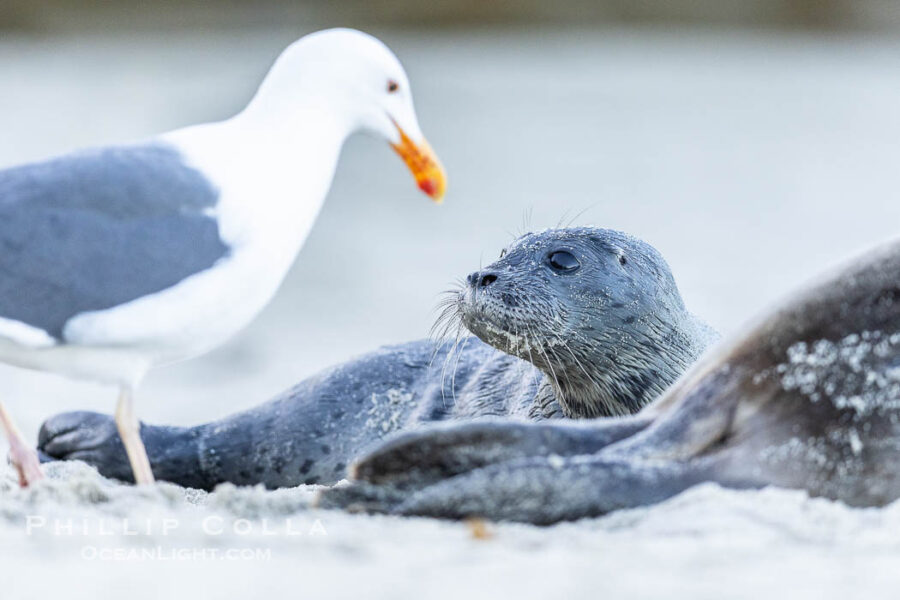
This is one of the famous or, depending on your political position, notorious Pacific harbor seals (Phoca vitulina richardsi) the reside at the Children’s Pool in La Jolla, California. Some people really hate these seals and feel their presence on the beach has robbed people of the use of small cove and want to see the seals gone, forcefully or otherwise. Others love the seals and don’t want to see them bothered at all. I don’t really care either way, I just like to shoot photos of them. I’ve been photographing (and diving with) these seals since their colony first began forming in the ’90s. There are certain times of day when the light angles and water movement really work well here for photography. On this day, one of the more charismatic seals was moving about at the water’s edge and paused for a moment with its flippers raised, looking at me. I got off a series of photos and this was the most appealing of the group.
![]() |
| Pacific harbor seal, an sand at the edge of the sea. Image ID: 26315 Species: Pacific harbor seal, Phoca vitulina richardsi Location: La Jolla, California, USA |
* I was fortunate to have three of my photographs receive Highly Honored recognition in this years Windland Smith Rice photography competition sponsored by Nature’s Best Photography. The first was a photo of photographer Garry McCarthy working in the Virgin River Narrows in Zion National Park. The second was a composition of the Giants Marbles in Joshua Tree National Park. 21,000 images were entered in the competition, 500 made it to the final round of judging and 131 were winners or highly honored and appeared in the most recent issue of Nature’s Best Photography magazine. I am crossing my fingers that one of mine will also be featured as part of the competition’s six-month exhibition next year at the Smithsonian Museum of Natural History in Washington D.C.
Stock Photo Gallery: Blue Shark Underwater Photographs
Underwater stock photos of Blue Sharks (Prionace glauca)
I’ve updated my collection of blue shark underwater photos. Most of these blue shark photographs were taking freediving (breathhold diving) with a few friends in the open ocean near San Diego or just below the border in Mexico. In days gone by, a small bucket of chum would bring in 5-20 blue sharks, sometimes more, and they were big beautiful sharks, sleek and long and graceful. Longliners and the fishing industry has decimated the blue shark (Prionace glauca) population in the eastern Pacific (along with many other shark species) and today a bucket of chum might attract a few sharks which will typically be small. Some of the best days of my life have been spent swimming around a small boat under the hot California sun, in clean blue offshore water, trying to keep track of the sharks swimming around and frame up a few good images. Life is good! Thanks for looking. Click the image below to see my gallery of blue shark photos.
![]() |
| Blue shark, Baja California. Species: Blue shark, Prionace glauca |
Humpback Whale Fluke ID Identification Photos
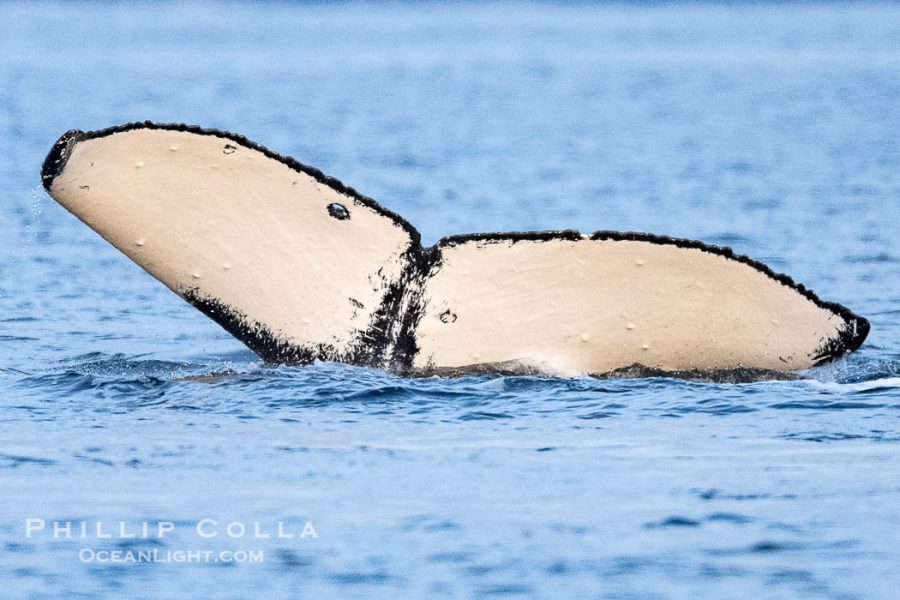
It has been 10+ years since I last worked at making fluke ID photos, but it’s just like riding a bike and one never forgets and I had some success at it yesterday. What is a “fluke ID photo” you ask? The underside (ventral surface) of the fluke (tail) of some species of whales — including most notably humpback whales — typically has permanent visible characteristics, such as light or dark patches, scratches, dots, scars, etc. that allow an individual whale to be identified. Whale researchers, including Dan Salden of Hawaii Whale Research Foundation with whom I worked from some years, maintain growing catalogs of humpback whale fluke ID photographs, allowing them to gain an understanding of where individual whales have been over time and, by extension, develop insight into the population as a whole.
Yesterday I went on a whale watching trip in the Santa Barbara Channel. This is a good time of year to see whales along California as they are moving generally northward along the coast and foraging for krill and schools of small fish. The trip was organized by the Los Angeles chapter of the American Cetacean Society using the boat “Condor Express”. We saw a few dozen humpback whales and a half dozen blue whales, and the seas were nice and flat. The weather was heavily overcast which is terrible for photography, so I resigned myself to use the longest lens I had and focus on practicing making fluke ID photos. I made clean fluke ID photos of 16 different humpback whales, so all I can say for certain is that there were at least 16 humpbacks that we saw. Some on the boat commented that we saw many more humpbacks than that, but looking closely at the fluke ID photos (as well as dorsal fins, which are good secondary ID devices) along with the corresponding times at which they were taken I figure that I personally saw about 18-22 humpbacks. It’s tough to know for sure when 80% or more of the animal is underwater 90% of the time. I totally made up those percentages by the way.
Here are the 16 humpback whales that gave it up for me on this trip: http://www.oceanlight.com/log/img/humpback-whale-fluke-id-identification-photos/ along with a few select ones below.
Stock Photo Gallery: Penguins!
I’m gradually revisiting my website galleries and improving them, removing images of lesser quality (unfortunately a lot of those!) and updating existing galleries with new material. If you enjoy penguins please take a look at my collection of Penguin Photos. With one exception**, all of these penguin photos were taken on a single long trip I made to the Falkland Islands, South Georgia Island and the Antarctic Peninsula (see my lengthy PDF trip journal if you want the deets, or you can view the same info as a series of blog posts). I was thrilled, nearly everyday of my trip to the Southern Ocean, to see penguins in the wild, sometimes in vast numbers, and I cannot wait to return to those places again. Within a few months of returning, one of the images was selected as the cover and inside spread in Nature’s Best, which was a real treat as I had not had an image published in that great magazine in some years. Thanks for looking!
** The exception is the Galapagos Penguin underwater photo which was made in, you guessed it, the Galapagos Islands in Ecuador.
Pacific White-Sided Dolphin Photos
The first dolphins I ever photographed were Pacific white-sided dolphins (Lagenorhynchus obliquidens). This extremely fast moving species of dolphin often appears around San Diego in winter, but is normally found much further north ranging as far as Alaska and around to Japan. We would freedive in the open ocean and hope our presence interested the white-sided dolphins enough to swim by and investigate us. The first image I ever had that placed in a major photography competition (Nature’s Best, early 90s I think) was an image of a Pacific white-sided dolphin towing a piece of kelp. It would drop the kelp in front of me, wait for me swim toward it and then zoom by to take it again before I could reach it. Schooled by a dolphin … Psych! For those of you who have only used digital cameras: can you imagine trying to freeze the motion of a fast-swimming white-sided dolphin using ISO-64 in a relatively dimly lit underwater setting? That’s what we used to have to do. It was downright primitive.
![]() |
| Pacific white sided dolphin. Image ID: 00036 Species: Pacific white-sided dolphin, Lagenorhynchus obliquidens Location: San Diego, California, USA |
Surfing Penguins
Last year I got to cross off one of my bucket list items: surfing penguins. I was fortunate to see surfing gentoo penguins (Pygoscelis papua) on New Island in the Falkland Islands. After hiking around some of New Island for most of the afternoon, visiting a couple of penguin and cormorant rookeries, I found myself at sunset on a gorgeous, long flat sand beach. The light was warm and gold, there was no wind and it was warm enough to wear just a light sweatshirt. All the others on the M/V Polar Star had left to return to the ship and I had the beach to myself, with penguins coming ashore from their foraging excursions in small groups. The gentoo penguins would ride the waves in at top speed, skizzing** across the shallow water and quickly flipping upright to land on their feet. Quickly they would shuffle across the beach and walk up onto the adjacent hills to find their nests and settle in for the evening.
![]() |
| Gentoo penguin coming ashore, after foraging at sea, walking through ocean water as it wades onto a sand beach. Adult gentoo penguins grow to be 30″ and 19lb in size. They feed on fish and crustaceans. Gentoo penguins reside in colonies well inland from the ocean, often formed of a circular collection of stones gathered by the penguins. Image ID: 23830 Species: Gentoo penguin, Pygoscelis papua Location: New Island, Falkland Islands, United Kingdom |
**another invented word, my third this year. Skizzing is like “skimming” only much better.
Standing Around Looking Cool
These Adelie penguins (Pygoscelis adeliae) in Antarctica seem unable to make up their minds which way to go. In fact, they are on a mission, walking from their nests on Paulet Island to the edge of the water, to swim out to sea and forage. I had earlier laid my camera down on the snow alongside the path there were following, and when the penguins strolled up I triggered the camera a few times from 50′ away with a $10 radio trigger I bought on Ebay. The seemed curious about the clicking sound coming from the strange and shiny black box laying on the snow, and stood around looking at it for a while. I made a few fun photos that way, including this one.
![]() |
| A group of Adelie penguins, on packed snow. Image ID: 25021 Species: Adelie Penguin, Pygoscelis adeliae Location: Paulet Island, Antarctic Peninsula, Antarctica |
California Sea Lion at Guadalupe Island, Mexico
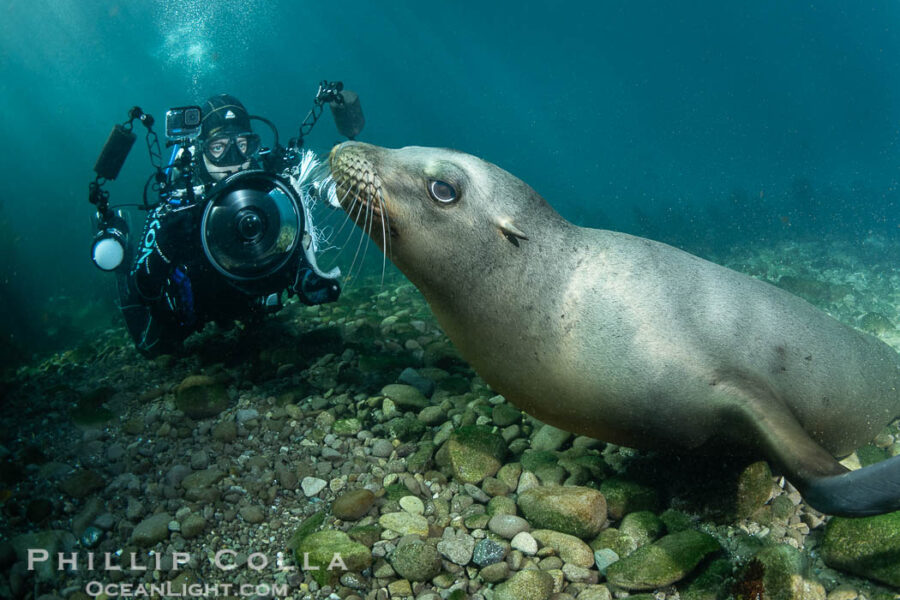
I’ve been photographing California sea lions (Zalophus californianus) for about 20 years and still do not have the perfect image of one. They are a lot of fun to dive with, but are notoriously fickle about staying put and posing for the camera. In addition, the fur of a seal lion can at once absorb all the light my strobes put out and yet can reflect sunlight and produce hot spots in the image. So, I’ll just have to continue diving with them and trying to make more sea lion photographs. This photo is one of my favorites. It was taken at Isla Afuera at the south end of Guadalupe Island in the mid-90s on one of our 10-day exploratory diving trips. We dove all around the island, finding new underwater sites that had probably never been seen before except by fish, turtles and sharks. This was some years before the shark diving that has made the island so popular now. California sea lions and Guadalupe fur seals were our nearly-constant companions on these dives. Here, an inquisitive juvenile lines up alongside Lorna McMurray. This image was used as the frontispiece for the excellent National Geographic book “Wild Ocean” by Dr. Sylvia Earle and Henry Wolcott.
![]() |
| California sea lion and diver consider each other, underwater in the clear ocean water of Guadalupe Island. Image ID: 02251 Species: California sea lion, Zalophus californianus Location: Guadalupe Island (Isla Guadalupe), Baja California, Mexico |
Adams River Sockeye Salmon Swimming Upstream
Sockeye Salmon swims upstream in the Adams River.
This is another sockeye salmon photograph (Oncorhynchus nerka) that took a while to grow on me, but which is now one of my favorites. Usually underwater photographers spend much of their time trying to eliminate backscatter and bubbles from their compositions, hoping for the clearest and most pristine rendition possible. For some reason, perhaps because I do not shoot underwater much anymore and have lost the grip I used to have on backscatter-free imagery, on this trip I deliberately placed my camera into some of the most turbulent, sand- and pebble-filled sections of the Adams River rapids. My hope was to make a few gritty images showing the sockeye salmon struggling against really difficult currents. While in most of my attempts this approach resulted in photographs in which the salmon is so heavily obscured by gook and turbulence as to be unusable, I did manage a few keepers with which I am happy. In these few frames — such as this one — the suspended sand and streaking bubbles add to the atmosphere of the image and help to describe the amazing migration story of these fascinating fish. I had to experiment and discover some different lighting techniques that allowed me to shed artificial light on the scene, balancing strobe light with the available sunlight while not highlighting the bubbles and sand any more than necessary. The trip ended up being one of the most challenging and technique-expanding underwater photography efforts I have made in years. I really hope to do it again.
![]() |
| Adams River sockeye salmon. A female sockeye salmon swims upstream in the Adams River to spawn, having traveled hundreds of miles upstream from the ocean. Image ID: 26161 Species: Sockeye salmon, Oncorhynchus nerka Location: Adams River, Roderick Haig-Brown Provincial Park, British Columbia, Canada |
Photography efforts undertaken by permission of Fisheries and Ocean Canada and BC Parks.
Sockeye Salmon Migrating Up The Adams River
A group of sockeye salmon school tightly as they migrate upstream in the Adams River.
In reviewing some images I shot last year I realized I almost trashed this one during the initial edit. I’m glad I saved it, because in the months since I shot it last October it has really grown on me. More than most of the sockeye salmon photographs (Oncorhynchus nerka) I made during my short day and a half at the Adams River, this photograph offers some intimacy and insight into the final weeks of life that sockeye salmon experience. The salmon migrate up the Fraser and Adams Rivers in large schools. At times they are “shoulder to shoulder”, pressed up against one another as they struggle against the neverending downstream current. Their bodies take on a rich crimson hue in their final weeks of life. That the color is “blood red” is poetic in a sense; it signifies their impending doom. They are struggling in the contest of their lives and even those individuals that successfully travel hundreds of miles from the Pacific Ocean to reach the spawning ground and produce eggs or sperm will still die. But perhaps the most appealing detail in this scene is the damage the salmon sustain in their migration. In the thousands of photographs I made of the spawning sockeye I did not see a single uninjured fish. Virtually every fish that reaches the Adams River looked “seriously thrashed”. Most injuries were contusions on the leading edges of the fishes jaws and head and on the dorsal, ventral and caudal fins. These appear to have arisen from collisions with rocks, branches and other obstacles that they slam into as they throw themselves upstream. It is a brutal pursuit. I have a newfound and keen appreciation for the hardiness of sockeye salmon after seeing the end of their migration firsthand and I hope the photographs I made will help convey that appreciation as they are used in publications in coming years.
![]() |
| Sockeye salmon, migrating upstream in the Adams River to return to the spot where they were hatched four years earlier, where they will spawn, lay eggs and die. Image ID: 26149 Species: Sockeye salmon, Oncorhynchus nerka Location: Adams River, Roderick Haig-Brown Provincial Park, British Columbia, Canada |
Photography efforts undertaken by permission of Fisheries and Ocean Canada and BC Parks.
Sandhill Cranes at Sunset, Bosque Del Apache NWR
Sandhill cranes (Grus canadensis) arrive at the “crane pools” at Bosque del Apache National Wildlife Refuge each evening. Having spent the day feeding in nearby corn fields, they will overnight standing on their long legs in the shallow pools, presumably so that they can rest in the dark with minimal threat of attack from coyotes. As the sun rises the next morning, they warm up and eventually depart to the corn fields again. This location is perhaps my favorite spot in all of Bosque del Apache. Skip and I made a point of being here for sunrise and sunset photography most days during our in visits to the Bosque in 2008 and 2010.
![]() |
| Sunset at Bosque del Apache National Wildlife Refuge, with sandhill cranes silhouetted in reflection in the calm pond. Spectacular sunsets at Bosque del Apache, rich in reds, oranges, yellows and purples, make for striking reflections of the thousands of cranes and geese found in the refuge each winter. Image ID: 21804 Species: Sandhill crane, Grus canadensis Location: Bosque del Apache National Wildlife Refuge, Socorro, New Mexico, USA |
HOME | Online Image Search | Photo of the Day | Contact / Bio | Licensing/Pricing | Prints | Stock List | Image Hierarchy | List of Log Entries | Site Map | Blue Whale | Cetaceans | Pinnipeds | Sharks | Rays | Fishes | Kelp Forest | Sea Birds | Inverts | Man & Animal | Man & Ocean | Ocean & Light | Ocean & Motion | Portraits | About Color and Monitor Calibration | Copyright Statement | All text and photographs copyright © Phillip Colla Natural History Photography All rights reserved worldwide. The content of this site is made available for purposes of researching images offered for license by Phillip Colla Natural History Photography. No image is to be copied, duplicated, modified or redistributed in whole or part without the prior written permission of Phillip Colla Natural History Photography. Whale logo is a trademark of Phillip Colla Natural History Photography, 8021 Paseo Arrayan, Carlsbad, CA 92009, USA. 760.707.7153 Email: oceanlight@OceanLight.com Web: www.OceanLight.com Portfolios: www.Gygis.com
Updated: May 18, 2013