Southeast Alaska is where humpback whale coordinated bubble-net feeding was first described. The behavior has since become one of the best-studied examples of coordinated foraging in any of the baleen whales. By working together and using a combination of movement, sound and positioning the whales are able to efficiently capture mouthfuls of fish.
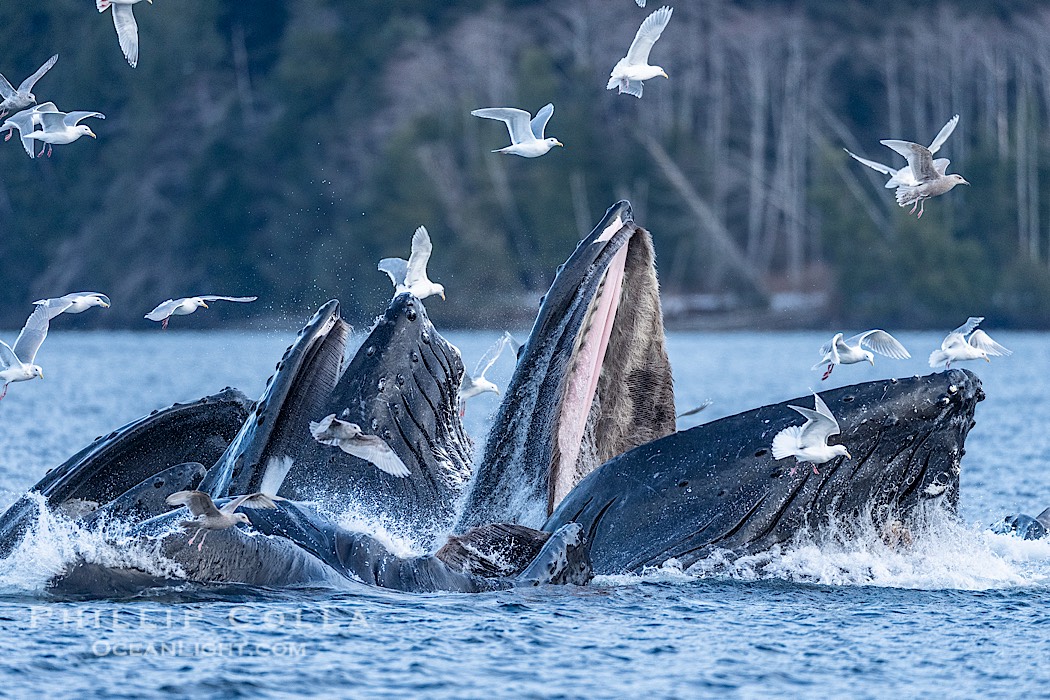
Humpback whales surface together during coordinated bubble-net feeding in Southeast Alaska. The whales use bubbles, sound, and movement to corral fish before capturing them in their open mouths.
Image ID: 41587
Species: Humpback whale, Megaptera novaeangliae
Location: Sitka Sound, Alaska
Cooperative bubble-net lunge feeding is a prey-corralling tactic in which one or more humpback whales dive beneath a prey patch, release a discrete sequence of bubbles while swimming in a broad arc or spiral, and create a rising cylindrical or spiral “net” that blocks prey laterally while the sea surface blocks escape above; the whales then surge upward and engulf the concentrated prey in one or more near-surface lunges. In the definitive Southeast Alaska description, Jurasz & Jurasz (1979) emphasized that the bubbles form a ring or closing spiral and that the prey becomes both contained and concentrated inside it before the lunge. In the classic Southeast Alaska literature, the main prey tied directly to bubble-netting are Pacific herring (Clupea pallasii; older papers often used Clupea harengus) and euphausiids or krill, especially Euphausia pacifica. The broader Southeast Alaska prey base for humpbacks also includes capelin (Mallotus villosus) and, in later innovative solo variants, juvenile salmon (Oncorhynchus spp.), but the historic cooperative bubble-net literature is centered first on herring and euphausiids rather than on every prey item humpbacks eat in the region. Mechanistically, the behavior works because the whales do not merely find dense prey; they re-shape the prey field. That interpretation was later supported experimentally by Sharpe & Dill (1997), who showed that Pacific herring strongly avoid bubbles and can be contained within a circular bubble curtain.
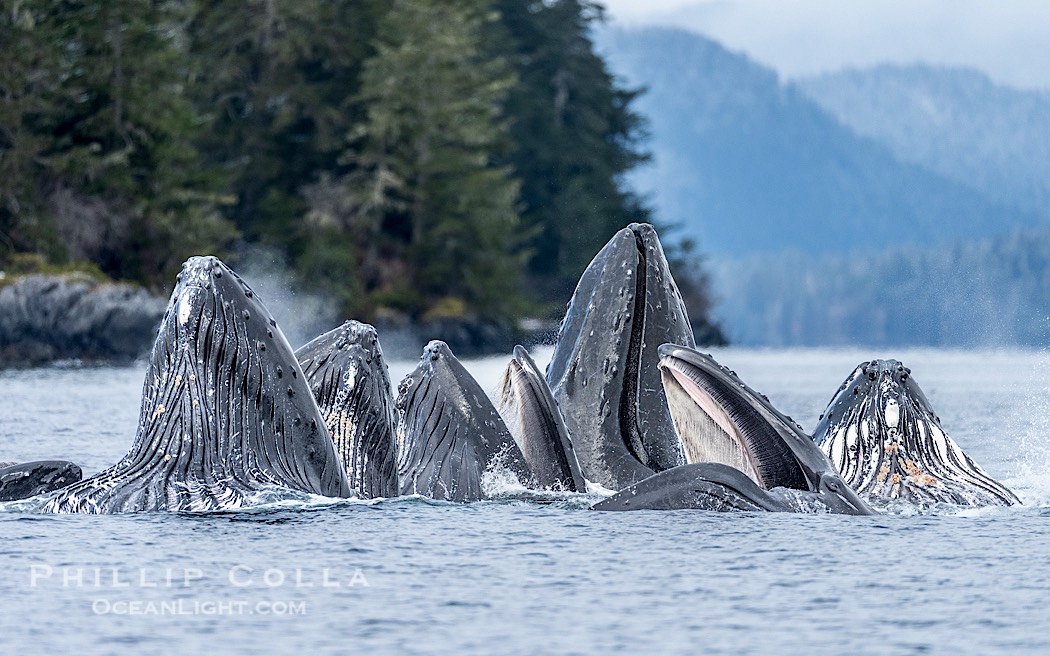
Humpback whales surface together during coordinated bubble-net feeding in Southeast Alaska. The whales use bubbles, sound, and movement to corral fish before capturing them in their open mouths.
Image ID: 41583
Species: Humpback whale, Megaptera novaeangliae
Location: Sitka Sound, Alaska
Bubble-net feeding is role-structured. In D’Vincent et al. (1985), an eight-whale pod near Admiralty Island repeatedly performed coordinated vertical lunges in fixed spatial positions; in some events, seven whales surfaced simultaneously inside the bubble ring while the eighth appeared to finish the net. Acoustic studies beginning with D’Vincent et al. (1985), continuing through Thompson, Cummings & Ha (1986), Cerchio & Dahlheim (2001), and Fournet et al. (2018), support at least three recurring functional contributions in herring-associated events: a bubble-net maker, one or more whales that maintain stable lunge positions in the formation, and a “vocal” role associated with the stereotyped feeding call near 500 Hz. That said, role labels remain partly inferential because no one can always see every submerged whale at once, and whales may switch jobs across bouts. As for numbers, the foundational peer-reviewed Southeast Alaska records document cooperative bubble-net events involving two adults in the first detailed Juneau observation and eight whales in the classic Admiralty Island study. What is still missing, even in 2026, is a peer-reviewed Southeast Alaska-wide census of exactly how many living whales are cooperative bubble-net specialists. The most defensible current statement is therefore that bubble-net feeding remains a specialized, socially structured subset of the regional foraging repertoire rather than a behavior used by every humpback in Southeast Alaska. For Southeast Alaska specifically, the clearest quantitative estimate now available concerns whales that themselves manufactured bubble-nets during systematic surveys: Szabo et al. (2024) documented solitary bubble-net foraging in 21 of 742 uniquely filmed whales (2.8%) in northern Southeast Alaska between 2019 and 2021. A comparable peer-reviewed Southeast Alaska-wide percentage for all cooperative bubble-net participants combined has not yet been published, so the safest conclusion is that bubble-net makers are a minority subset of the regional population.
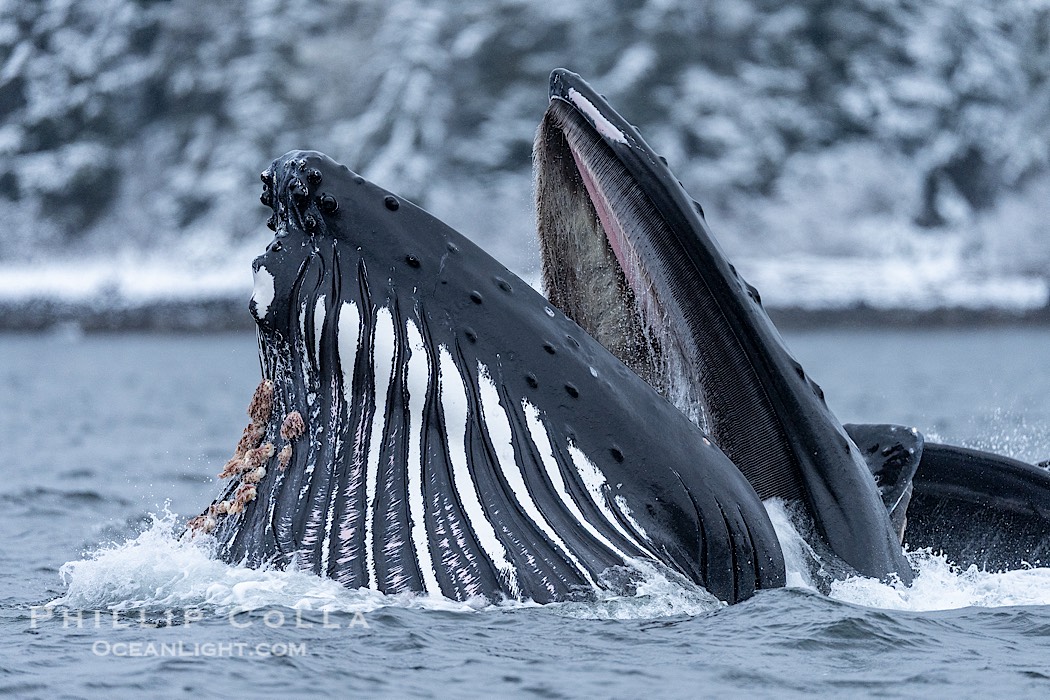
Humpback whale surfaces during coordinated bubble-net feeding in Southeast Alaska. The whales use bubbles, sound, and movement to corral fish before capturing them in their open mouths.
Image ID: 41582
Species: Humpback whale, Megaptera novaeangliae
Location: Sitka Sound, Alaska
The Southeast Alaska literature shows that “bubble-net feeding” is not a single maneuver but a family of related tactics that vary with prey, group size, and perhaps learned traditions of particular whales. Jurasz & Jurasz (1979) distinguished lunge feeding, bubble-net feeding, and flick feeding, and they reported that herring nets are generally larger and slower to close than euphausiid nets. D’Vincent et al. (1985) further showed that groups can be cooperative even when a visible bubble net is absent: their whales switched from feeding on euphausiids within a net to coordinated vertical lunges on a large herring school without visibly blowing a new net each time. Underwater work by Wiley et al. (2011) clarified that bubble-netting includes important submerged components and that the net is a three-dimensional structure, not just a surface ring. Solitary whales do practice the behavior differently from groups. In northern Southeast Alaska, Szabo et al. (2024) showed that solitary whales feeding on krill manufacture internally tangential multi-ring nets and appear to control ring number, net size, net depth, and bubble spacing to raise per-lunge prey intake. That study is also important conceptually because it explicitly argues that manufactured bubble-nets are tools: at least in the solitary Southeast Alaska form, the whale builds and adjusts a physical bubble structure to alter prey behavior and improve capture efficiency. Kosma et al. (2019) then documented solo bubble-netting followed by horizontal or vertical pectoral herding, with vertical lunges, lateral lunges, and flipper-generated secondary barriers, mostly around juvenile salmon release sites. In short, group bubble-netting in Southeast Alaska is most strongly associated with cooperative herring feeding and fixed multi-whale coordination, while solitary bubble-netting is more individually adjustable and more likely to be modified with tight multi-ring nets or pectoral maneuvers aimed at krill or juvenile salmon.

Humpback whales bubblenet feeding in Southeast Alaska. Coordinated bubble-net feeding is a specialized cooperative feeding technique used by humpback whales, where a group of whales works together to trap fish or krill in a net of bubbles then lunge through to feed.
Image ID: 40921
Species: Humpback whale, Megaptera novaeangliae
Location: Sitka Sound, Alaska
The behavior is distributed across the protected inner waterways of Southeast Alaska rather than at a single famous viewpoint. The original Jurasz & Jurasz (1979) study area included Glacier Bay, Lynn Canal, and Frederick Sound, and their field program began near Juneau. Their first detailed herring bubble-net record came from the south tip of Shelter Island near Juneau on 13 July 1974, and one of the first euphausiid bubble-net observations came from Frederick Sound near Five Finger Light on 21 August 1975. The classic coordinated study by D’Vincent et al. (1985) took place at the southwest tip of Admiralty Island, where a shoal separates Chatham Strait and Frederick Sound, during 9–11 August 1983. More recent work has added other Southeast Alaska subregions: Szabo et al. (2024) documented a large aggregation of solitary bubble-netting whales at the confluence of Frederick Sound and lower Stephens Passage in mid-July 2019, while Kosma et al. (2019) documented solo bubble-net and pectoral-herding tactics in Warm Springs Bay, Takatz Bay, Kasnyku Bay, Kelp Bay, and at Hidden Falls Hatchery between 2016 and 2018. Sitka Sound deserves separate mention because it is now one of the best-known contemporary Southeast Alaska sites for the behavior. An academic note from 2025 reports that humpbacks are frequently present there in large numbers in late March during the pre-spawn Pacific herring aggregation, and Straley et al. (2018) shows that Sitka Sound also supports fall and winter humpback foraging on both herring and krill. In addition, Burrows et al. (2016) documented deep krill-focused foraging by tagged humpbacks in Sitka Sound in September 2012. Seasonally, the classic summer concentration is July–August, but Southeast Alaska humpbacks may feed as early as April and as late as November in the older literature, and some areas such as Sitka Sound and Lynn Canal now support substantial fall and winter presence as well.
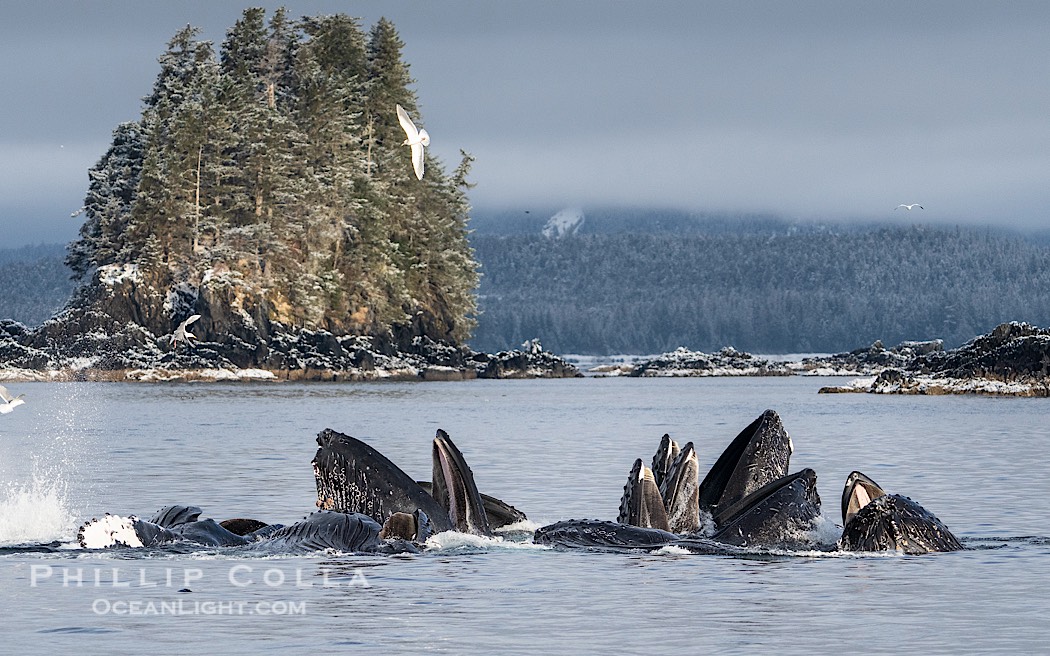
Humpback whales surface together during coordinated bubble-net feeding in Southeast Alaska. The whales use bubbles, sound, and movement to corral fish before capturing them in their open mouths.
Image ID: 41580
Species: Humpback whale, Megaptera novaeangliae
Location: Sitka Sound, Alaska
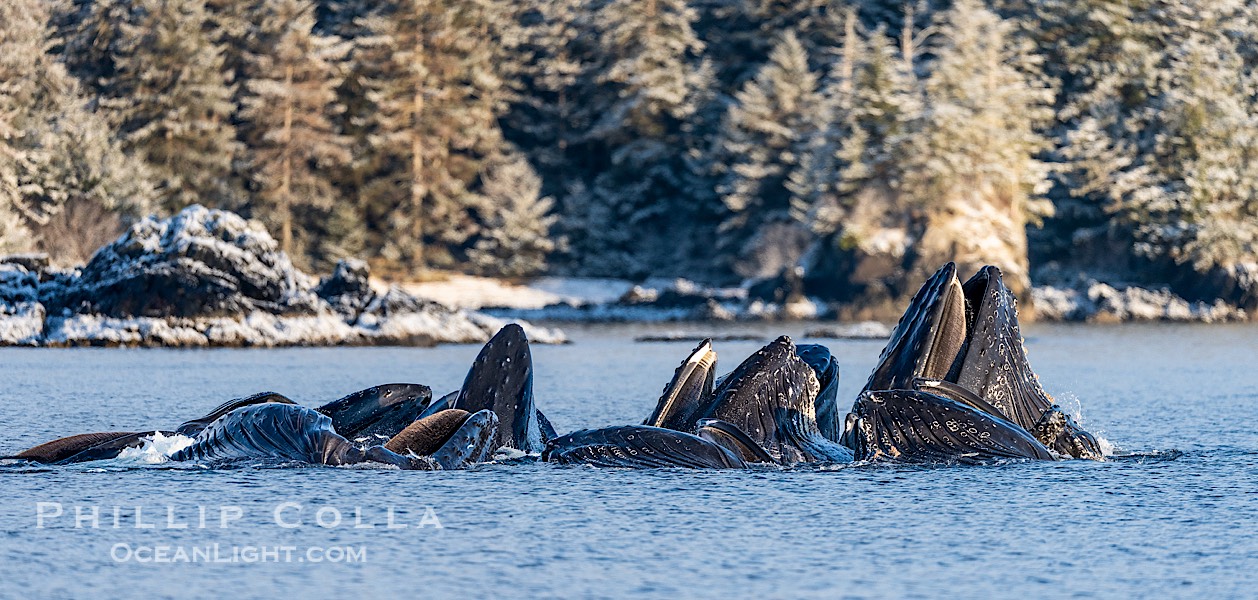
Humpback whales surface together during coordinated bubble-net feeding in Southeast Alaska. The whales use bubbles, sound, and movement to corral fish before capturing them in their open mouths.
Image ID: 41581
Species: Humpback whale, Megaptera novaeangliae
Location: Sitka Sound, Alaska
The definitive Southeast Alaska description belongs first to Charles M. Jurasz and Virginia P. Jurasz (1979), who turned years of direct observation into a formal description of lunge feeding, bubble-net feeding, and flick feeding, tied each to prey type, and documented the first detailed regional examples. D’Vincent, Nilson and Hanna (1985) then provided the first detailed account of fixed positions, coordinated vertical lunges, and the associated low-frequency feeding call in Southeastern Alaska. From that point forward, the literature shifted to explaining how it works. Thompson et al. (1986) quantified sounds and source levels associated with Southeast Alaska humpback behavior. Sharpe & Dill (1997) experimentally demonstrated that herring avoid bubbles and can be constrained by bubble curtains. Cerchio & Dahlheim (2001) quantified variation in feeding vocalizations, while Fournet et al. (2018) showed that the famous feeding call is also produced by solitary whales, broadening its presumed function from pure group coordination toward prey manipulation. In the same year, Fournet et al. (2018) documented striking multi-decadal stability in the Southeast Alaskan calling repertoire. Kosma et al. (2019) described pectoral herding as an innovative solo refinement of bubble-net feeding. Szabo et al. (2024) used tags and drones to show that solitary bubble-nets function as adjustable tools that can increase prey intake, and Nemeth et al. (2025) linked the behavior to humpback-specific turning performance and flipper-generated lift. For the question of whether the behavior is learned rather than wholly instinctive, two studies matter especially: Allen et al. (2013) showed that another humpback foraging innovation, lobtail feeding, spread culturally through social transmission, and Wray et al. (2026) then provided direct, strong evidence for social learning of both cooperative and solo bubble-netting in the northern Canadian Pacific. Taken together, those findings support treating bubble-net feeding as a socially learned tradition rather than a wholly instinctive, fixed response. Finally, although it was conducted in the adjacent Canadian Pacific rather than Southeast Alaska, Wray et al. (2026) is one of the most important recent comparative studies because it provides evidence that both cooperative and solo bubble-netting can diffuse through whale social networks, strengthening the case that the behavior is culturally transmitted as well as ecologically useful. Ongoing field programs by NOAA Fisheries, the Alaska Whale Foundation, the UAS Sitka Whale Lab, and the Marine Mammal Research Program continue to combine photo-identification, acoustics, prey mapping, biologging tags, and drones to study exactly how Southeast Alaska humpbacks coordinate, innovate, and pass these tactics on.
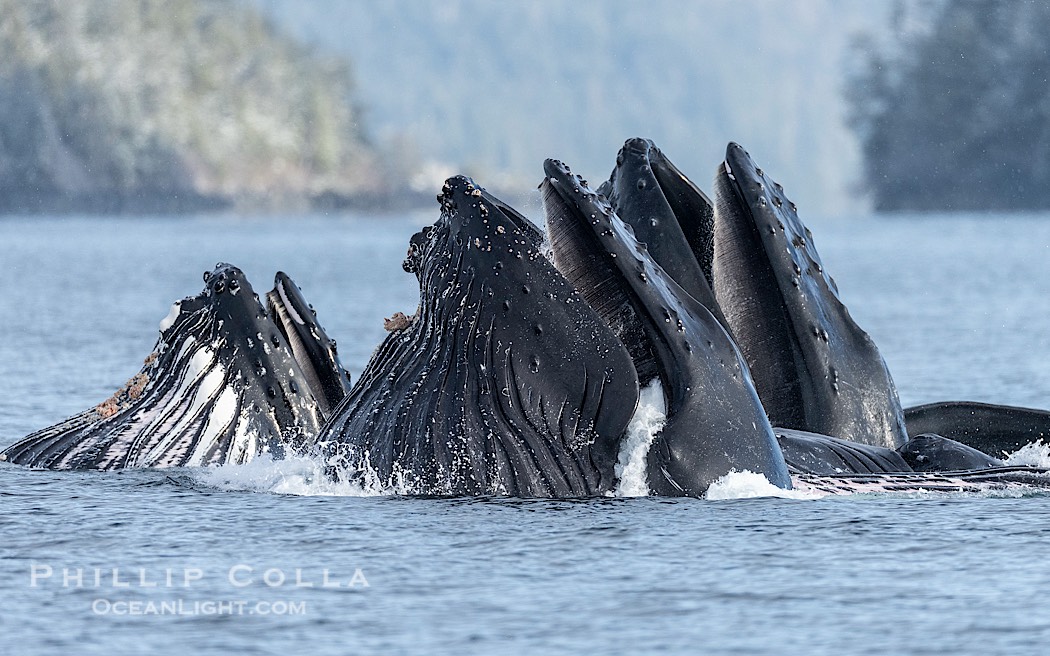
Humpback whales surface together during coordinated bubble-net feeding in Southeast Alaska. The whales use bubbles, sound, and movement to corral fish before capturing them in their open mouths.
Image ID: 41585
Species: Humpback whale, Megaptera novaeangliae
Location: Sitka Sound, Alaska
- NOAA Fisheries — Humpback Whale Research in Alaska
- NOAA Fisheries — Humpback Whale Science Overview
- Alaska Whale Foundation — Whale Research
- University of Alaska Southeast — Sitka Whale Lab
- Marine Mammal Research Program (Hawaiʻi Institute of Marine Biology) — Publications
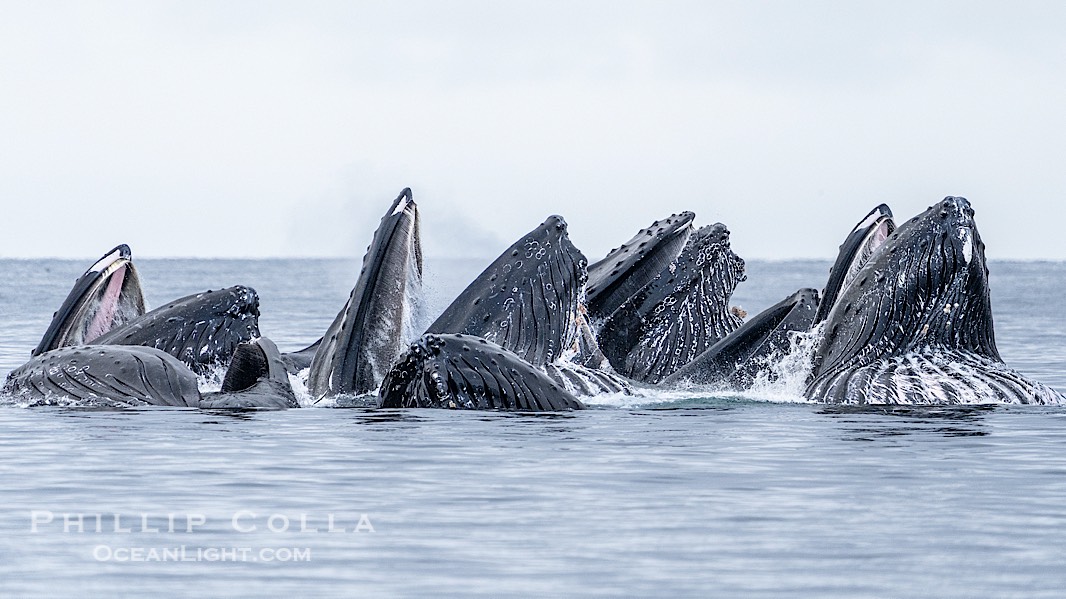
Humpback whales surface together during coordinated bubble-net feeding in Southeast Alaska. The whales use bubbles, sound, and movement to corral fish before capturing them in their open mouths.
Image ID: 41584
Species: Humpback whale, Megaptera novaeangliae
Location: Sitka Sound, Alaska
Selected academic publications
- Jurasz, C. M., & Jurasz, V. P. (1979). Feeding Modes of the Humpback Whale, Megaptera novaeangliae, in Southeast Alaska. Scientific Reports of the Whales Research Institute 31: 69–83.
- D’Vincent, C. G., Nilson, R. M., & Hanna, R. E. (1985). Vocalization and Coordinated Feeding Behavior of the Humpback Whale in Southeastern Alaska. Scientific Reports of the Whales Research Institute 36: 41–47.
- Thompson, P. O., Cummings, W. C., & Ha, S. J. (1986). Sounds, source levels, and associated behavior of humpback whales, Southeast Alaska. Journal of the Acoustical Society of America 80(3): 735–740.
- Sharpe, F. A., & Dill, L. M. (1997). The behavior of Pacific herring schools in response to artificial humpback whale bubbles. Canadian Journal of Zoology 75: 725–730.
- Cerchio, S., & Dahlheim, M. (2001). Variation in feeding vocalizations of humpback whale Megaptera novaeangliae from Southeast Alaska. Bioacoustics 11(4): 277–295.
- Fournet, M. E. H., Szabo, A., & Mellinger, D. K. (2015). Repertoire and classification of non-song calls in Southeast Alaskan humpback whales (Megaptera novaeangliae). Journal of the Acoustical Society of America 137: 1–10.
- Burrows, J. A., Johnston, D. W., Straley, J. M., et al. (2016). Prey density and depth affect the fine-scale foraging behavior of humpback whales Megaptera novaeangliae in Sitka Sound, Alaska, USA. Marine Ecology Progress Series 561: 245–260.
- Straley, J. M., Moran, J. R., Boswell, K. M., et al. (2018). Seasonal presence and potential influence of humpback whales on wintering Pacific herring populations in the Gulf of Alaska. Deep-Sea Research Part II 147: 173–186.
- Fournet, M. E. H., Gabriele, C. M., Sharpe, F., Straley, J. M., & Szabo, A. (2018). Feeding calls produced by solitary humpback whales. Marine Mammal Science 34: 851–865.
- Fournet, M. E. H., Szabo, A., Mellinger, D. K., & Klinck, H. (2018). Some things never change: multi-decadal stability in humpback whale calling repertoire on Southeast Alaskan foraging grounds. Scientific Reports 8: 13166.
- Kosma, M. M., Werth, A. J., Szabo, A. R., & Straley, J. M. (2019). Pectoral herding: an innovative tactic for humpback whale foraging. Royal Society Open Science 6: 191104.
- Wiley, D. N., Ware, C., Bocconcelli, A., et al. (2011). Underwater components of humpback whale bubble-net feeding behaviour. Behaviour 148: 575–602.
- Allen, J., Weinrich, M., Hoppitt, W., & Rendell, L. (2013). Network-Based Diffusion Analysis Reveals Cultural Transmission of Lobtail Feeding in Humpback Whales. Science 340(6131): 485–488.
- Szabo, A., Bejder, L., Warick, H., et al. (2024). Solitary humpback whales manufacture bubble-nets as tools to increase prey intake. Royal Society Open Science 11: 240328.
- Nemeth, C., Gough, W. T., Segre, P. S., et al. (2025). The key to bubble-net feeding: how humpback whale morphology functionally differs from other baleen whales. Journal of Experimental Biology 228: jeb249607.
- Wray, J., O’Mahony, É. N., Baer, G., et al. (2026). The diffusion of cooperative and solo bubble net feeding in Canadian Pacific humpback whales. Proceedings of the Royal Society B 293: 20252409.
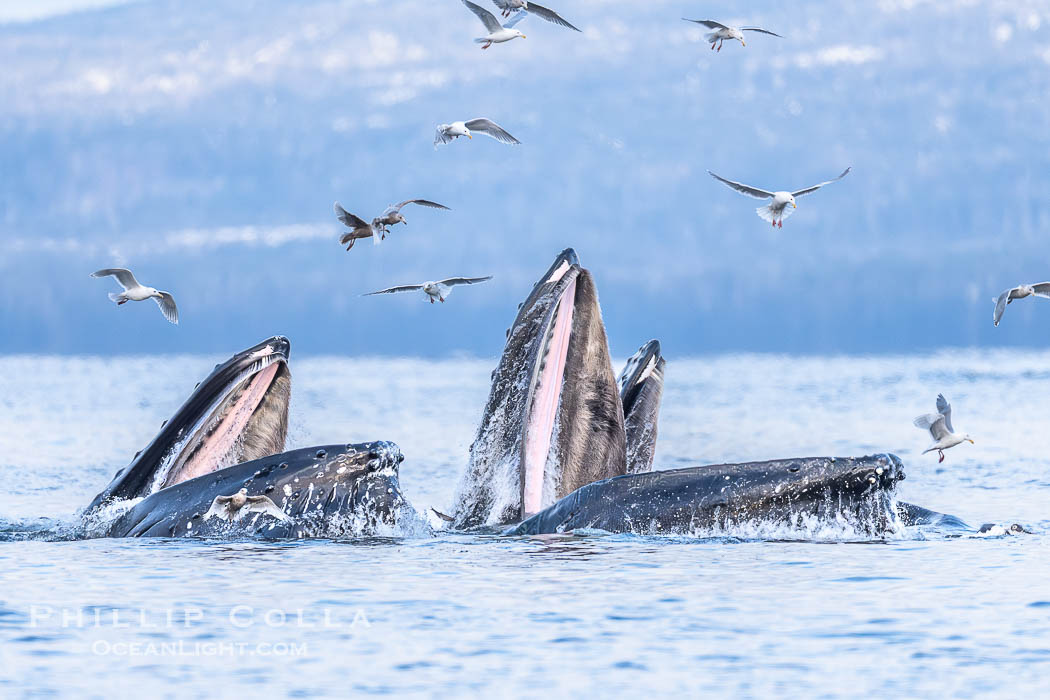
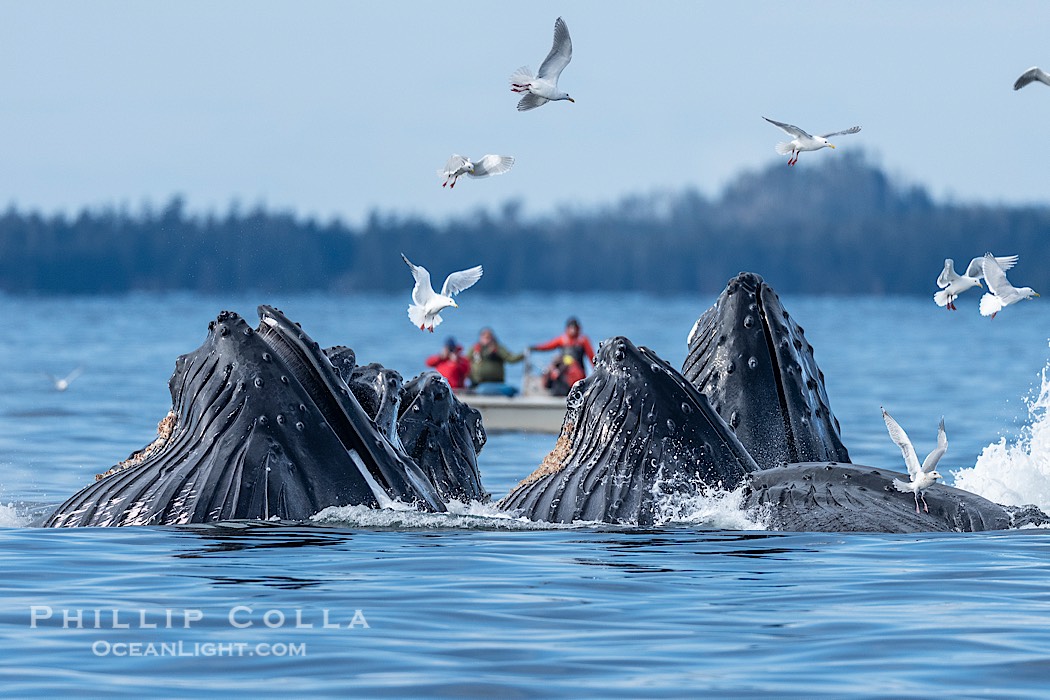
Humpback whales surface together during coordinated bubble-net feeding in Southeast Alaska. The whales use bubbles, sound, and movement to corral fish before capturing them in their open mouths.
Image ID: 41598
Species: Humpback whale, Megaptera novaeangliae
Location: Sitka Sound, Alaska
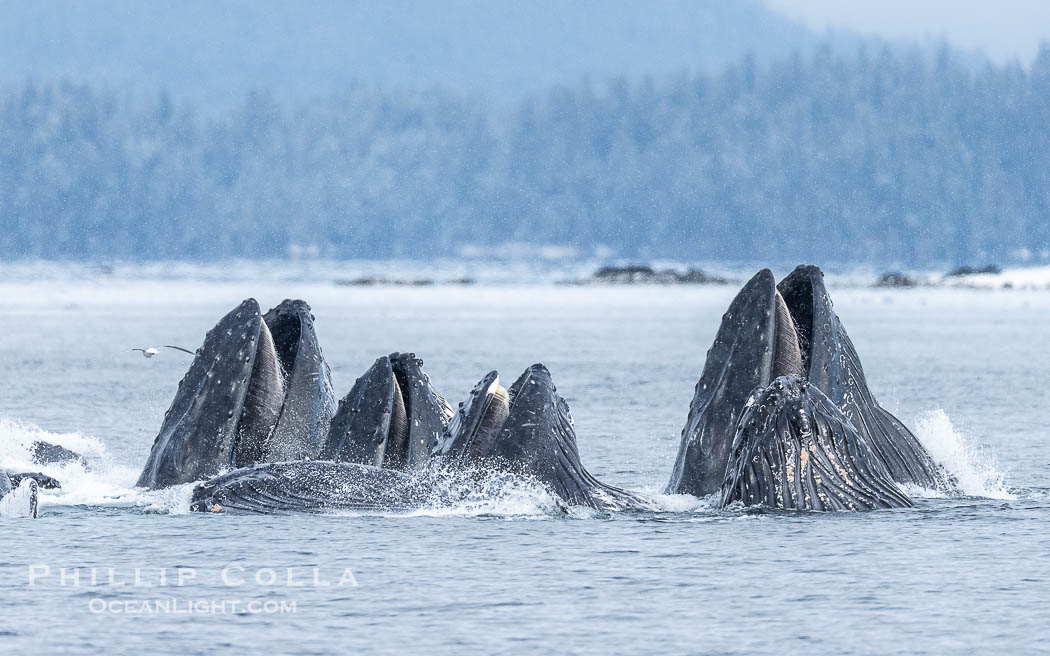
Humpback whales surface together during coordinated bubble-net feeding in Southeast Alaska. The whales use bubbles, sound, and movement to corral fish before capturing them in their open mouths.
Image ID: 41602
Species: Humpback whale, Megaptera novaeangliae
Location: Sitka Sound, Alaska
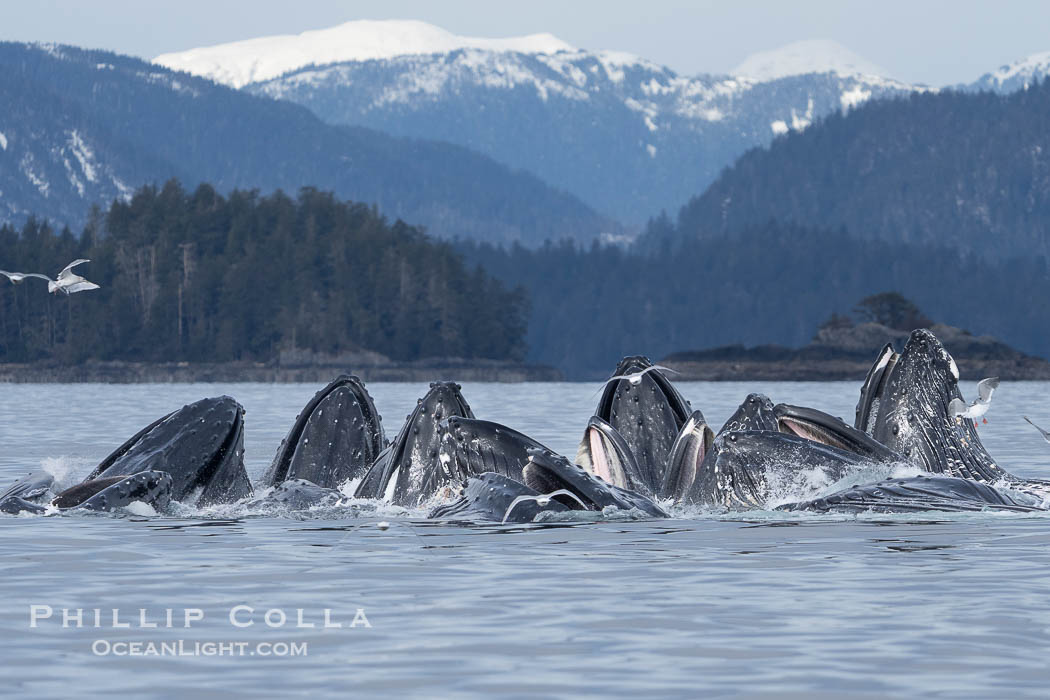
Humpback whales surface together during coordinated bubble-net feeding in Southeast Alaska. The whales use bubbles, sound, and movement to corral fish before capturing them in their open mouths.
Image ID: 41592
Species: Humpback whale, Megaptera novaeangliae
Location: Sitka Sound, Alaska
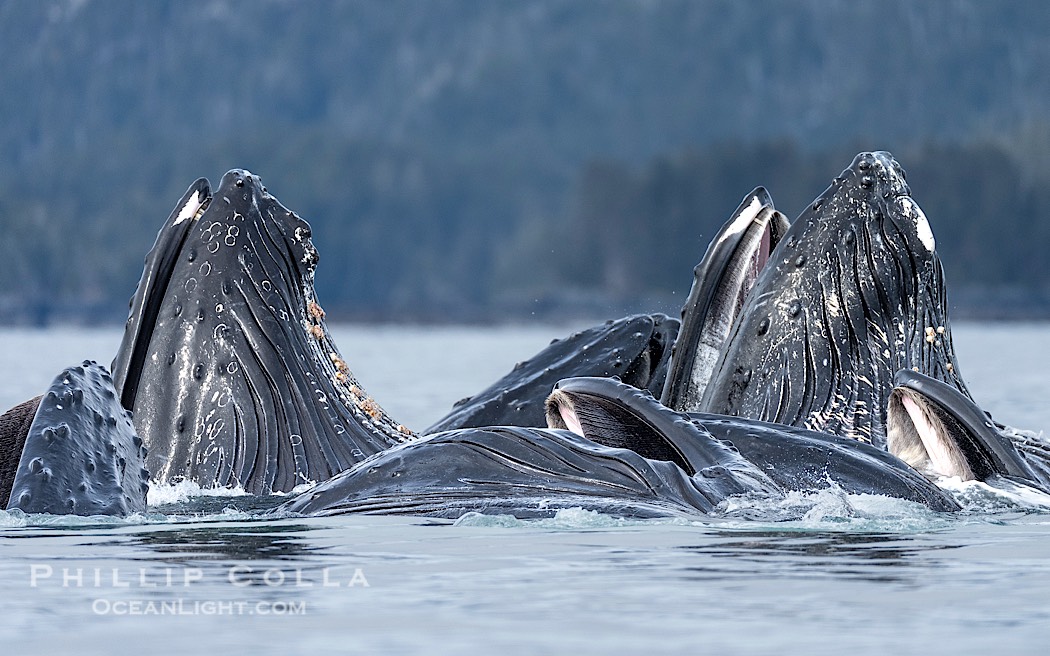
Humpback whales surface together during coordinated bubble-net feeding in Southeast Alaska. The whales use bubbles, sound, and movement to corral fish before capturing them in their open mouths.
Image ID: 41599
Species: Humpback whale, Megaptera novaeangliae
Location: Sitka Sound, Alaska
Humpback whales surface together during coordinated bubble-net feeding in Southeast Alaska. The whales use bubbles, sound, and movement to corral fish before capturing them in their open mouths.
Image ID: 41600
Species: Humpback whale, Megaptera novaeangliae
Location: Sitka Sound, Alaska
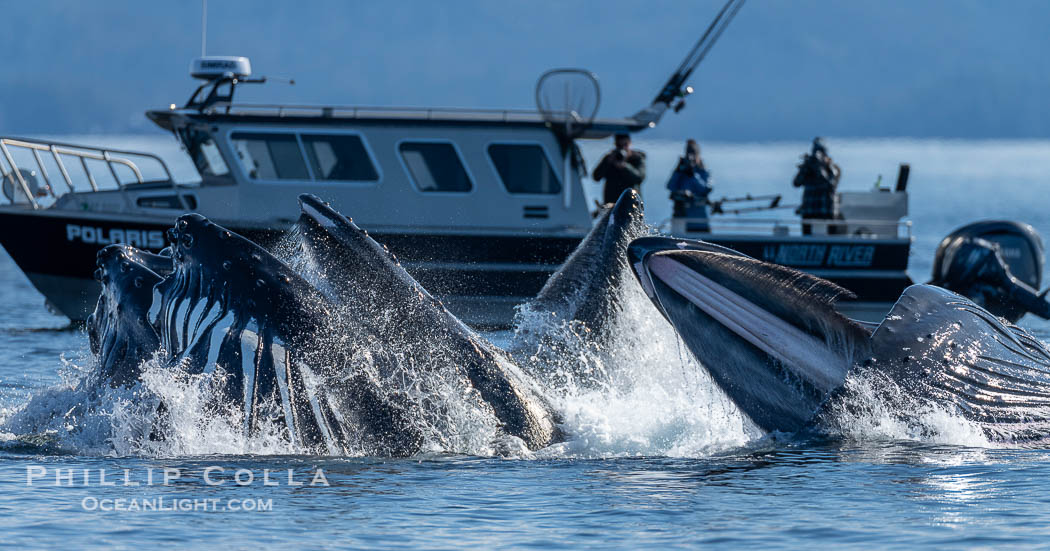
Humpback whales surface together during coordinated bubble-net feeding in Southeast Alaska. The whales use bubbles, sound, and movement to corral fish before capturing them in their open mouths.
Image ID: 41624
Species: Humpback whale, Megaptera novaeangliae
Location: Sitka Sound, Alaska


