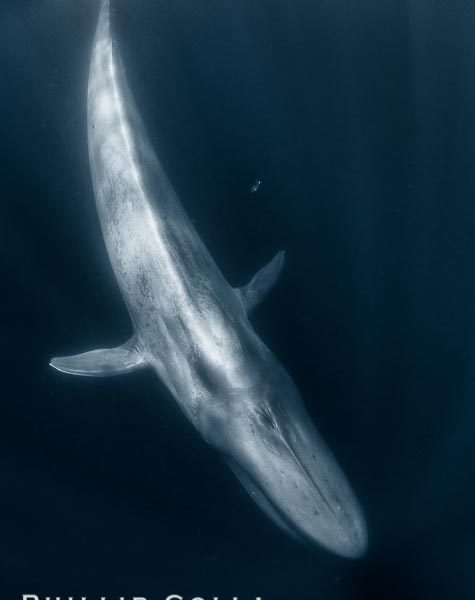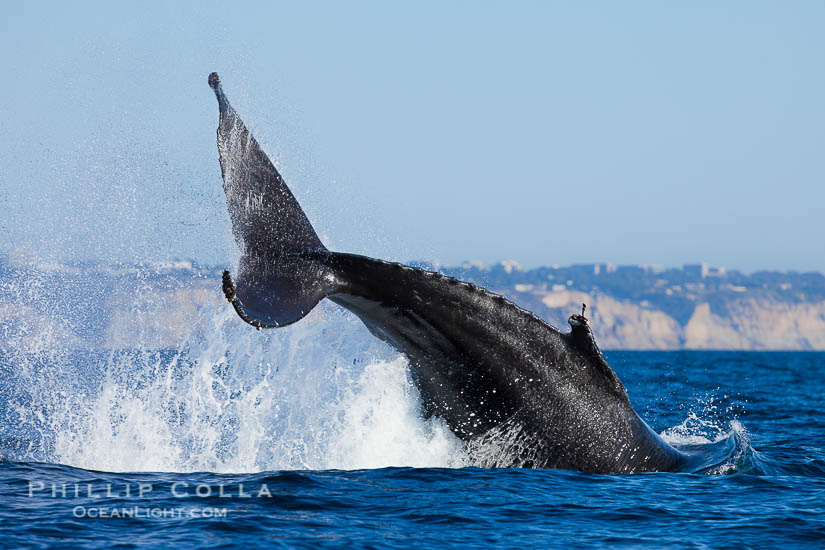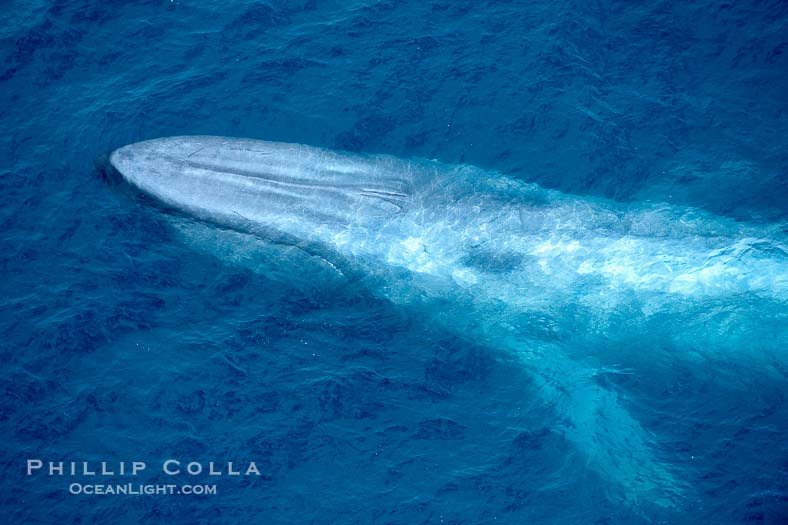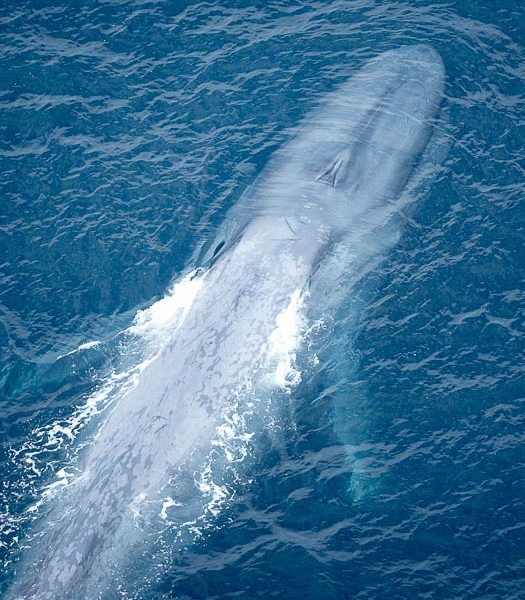
Blue Whale, Phillip Colla Photography

Blue Whale Pictures (Balaenoptera musculus)

Filed under: Blue Whale, Photoshelter, Wildlife on 7/26/2009

Some of my blue whale pictures (Balaenoptera musculus) are now on Photoshelter (in addition to the blue whale pictures on this website). I’m giving Photoshelter a try to see if it improves automation of licensing and collections for small- and medium-size editorial uses. Plus Photoshelter has neat slide shows, like this one:


Blue Whale Pictures - Images by Phillip Colla

(Blue whale photo slideshow.)

Keywords: blue whale picture, balaenoptera musculus, stock photo, image, photograph, wildlife, whale, marine.

Add a comment

Subscribe to this feed - Subscribe via Feedburner - Stumble it! - Digg this! - Add to Del.icio.us - Share on Facebook

Blue Whale Photo in National Geographic Magazine

Filed under: Blue Whale, Info, Get The, Photography, Tear Sheets, Wildlife on 2/18/2009

I am very fortunate to have one of my blue whale photos (Balaenoptera musculus) appear in the March 2009 issue of National Geographic Magazine. It is an image of a whale’s dorsal ridge and fluke, taken underwater, in the “Inside Geographic” section near the end of the magazine which describes an upcoming NG television special about blue whales and the researchers who study them. It is related to the excellent article on blue whales appearing earlier in the same issue, written by Kenneth Brower and beautifully photographed by the world’s foremost whale photographer, Flip Nicklin.

Blue whale dorsal ridge and fluke, underwater, National Geographic Magazine, March 2009, copyright Phillip Colla

Blue whale, National Geographic Magazine, March 2009, copyright Phillip Colla

Add a comment

Subscribe to this feed - Subscribe via Feedburner - Stumble it! - Digg this! - Add to Del.icio.us - Share on Facebook

Aerial Photo of a Blue Whale

View This Blog Post in Google Earth (How Cool Is That?)  View this blog entry in Google Earth
Latitude: 32° 48' 8.56" N, Longitude: 117° 23' 23.17" W, Coord: 32.80238°, -117.38977°
Filed under: Blue Whale, California, Photo of the Day, San Diego, Wildlife on 9/14/2008

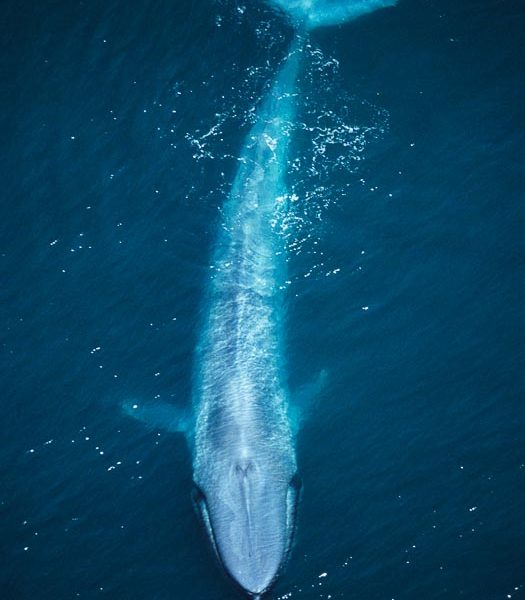
Here is another blue whale aerial photo shot from our recent flight over the Coronado Islands and Nine Mile Bank. More blue whale aerial photos.

Blue whale. The sleek hydrodynamic shape of the enormous blue whale allows it to swim swiftly through the ocean, at times over one hundred miles in a single day., Balaenoptera musculus,  Copyright Phillip Colla, image #21250, all rights reserved worldwide.
Blue whale. The sleek hydrodynamic shape of the enormous blue whale allows it to swim swiftly through the ocean, at times over one hundred miles in a single day. La Jolla, San Diego, California, USA.
Image: 21250  
Species: Balaenoptera musculus
Location: La Jolla, San Diego, California, USA
Click To View This Location in Google Earth.  You must have Google Earth installed for this feature to work correctly. View this Image in Google Earth!

 
Add a comment

Subscribe to this feed - Subscribe via Feedburner - Stumble it! - Digg this! - Add to Del.icio.us - Share on Facebook

Blue Whale Aerial Photograph

Filed under: Blue Whale, California, Photo of the Day, Wildlife on 9/11/2008

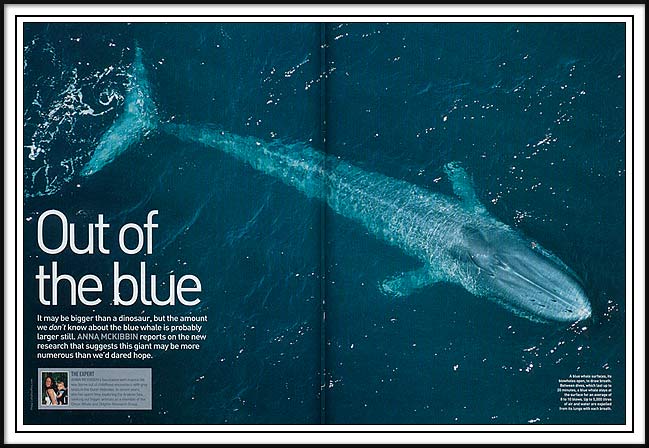
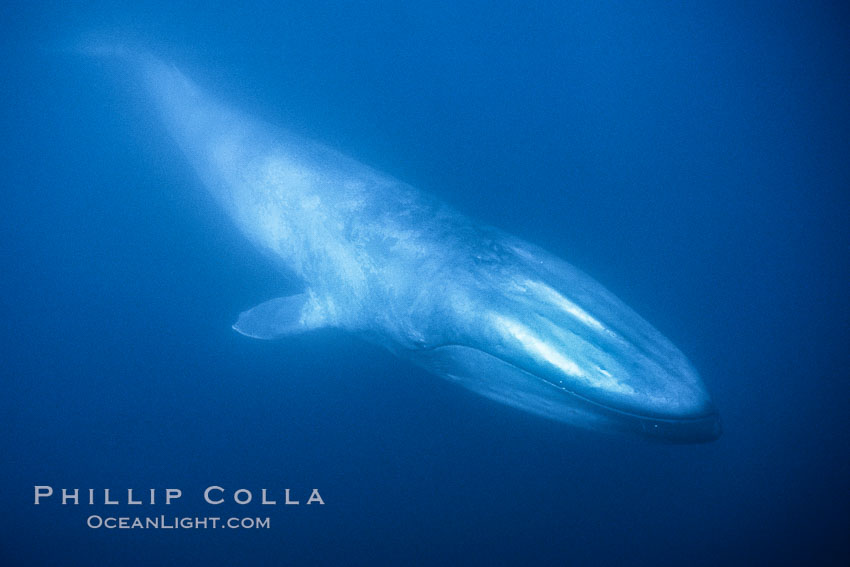
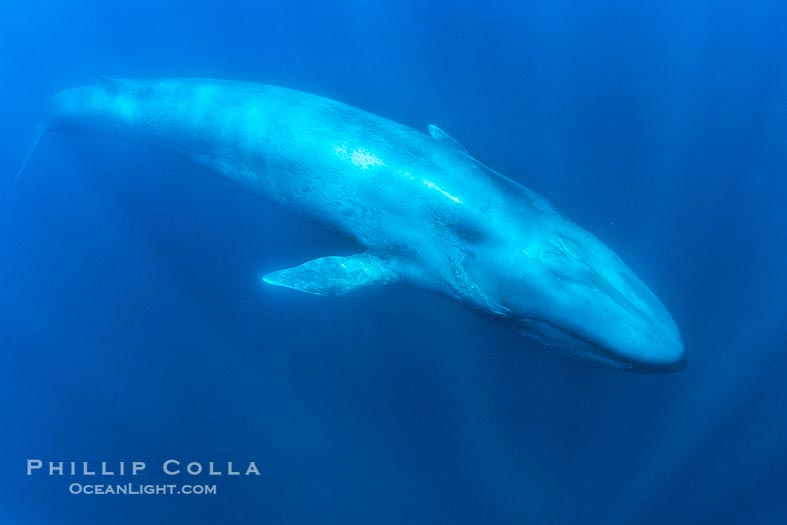
I had a chance to go flying with a pilot friend whom I had not seen in a few years, and jumped at the opportunity. Flying in small planes is a lot of fun, and it allows us to see the ocean in ways one cannot from the coast or on a boat. The plan was to fly over the Nine Mile Bank and around the Coronado Islands. We saw hundreds of Risso’s dolphins, and two huge herds of what appeared to be short-beaked common dolphins (it was difficult to be sure from altitude but they were one of the smaller dolphin species). Mola mola (ocean sunfish) were sunning themselves on the surface, we saw about a dozen of them without really even looking very hard. And we found at least four, perhaps five, blue whales above the submarine trench off La Jolla. The only times I have ever truly seen an entire blue whale, clearly and for more than a few moments, is from the air. When observed from a boat, only about 10-20% of a blue whale is visible at a time. When seen underwater, which is quite rare, the entire blue whale may be briefly visible if the water is clear enough but it is nonetheless difficult to truly appreciate the detail and sleek lines that a blue whale has in such a fleeting moment.

Blue whale, swimming through the open ocean., Balaenoptera musculus,  Copyright Phillip Colla, image #21248, all rights reserved worldwide.
Blue whale, swimming through the open ocean. La Jolla, San Diego, California, USA.
Image: 21248  
Species: Balaenoptera musculus
Location: La Jolla, San Diego, California, USA
Click To View This Location in Google Earth.  You must have Google Earth installed for this feature to work correctly. View this Image in Google Earth!


I was glad to have a new Nikon D3 with me since we had less than optimal photography weather and the camera has great performance in low light. The skies were mostly cloudy this day, so the lighting on the whales was flat and without contrast. The low light levels also meant I was fighting for enough shutter speed to freeze the motion of the whales against the shaking of the camera in my hands as I tried to keep it steady shooting out the small plane. I jacked up the ISO to 1600 and even 2000 for some of the shots, and the results were amazing: the color was intact with plenty of detail in the shadow areas and very little noise. I’ve shot film on these animals before in ideal conditions and even then it was difficult to obtain sharp appealing images. Shooting good images with film on this day would have been impossible, and was difficult even with my Canon bodies (1DsII and 5D). But the Nikon D3 recorded so much detail at high ISO that with the usual raw conversion steps (white balance, curves, levels) I was able to glean some real keepers.

Add a comment

Subscribe to this feed - Subscribe via Feedburner - Stumble it! - Digg this! - Add to Del.icio.us - Share on Facebook

Blue Whale Photo in BBC Wildlife

Filed under: Blue Whale, Photography, Tear Sheets, Wildlife on 11/29/2006

BBC Wildlife is the finest wildlife magazine in the UK and Europe, and one in which I have enjoyed seeing my images occasionally appear. The November 2006 issue has a nice article about blue whales (Balaenoptera musculus), authored by Anna McKibbin, leading with a two-page spread of a shot I took some years ago while flying over the ocean in a small plane.

See also:

blue whale photos, Balaenoptera musculus photos, blue whale aerial photos.

Add a comment

Subscribe to this feed - Subscribe via Feedburner - Stumble it! - Digg this! - Add to Del.icio.us - Share on Facebook

Blue Whale Aerial Photo

Filed under: Blue Whale, California, Photo of the Day, Wildlife on 9/20/2006

This blue whale (Balaenoptera musculus), was photographed offshore of the coast of Baja California, Mexico:

Keywords: blue whale photos, Balaenoptera musculus

Add a comment

Subscribe to this feed - Subscribe via Feedburner - Stumble it! - Digg this! - Add to Del.icio.us - Share on Facebook

Photo of a Blue Whale Fluke

Check out the fluke on this blue whale (Balaenoptera musculus) , fringed with barnacles and sporting what is almost certainly an orca bite on the left lobe:

Blue whale fluke with barnacles and orca bite, San Diego, copyright Oceanlight.com

See also whale fluke photos.

Add a comment

Subscribe to this feed - Subscribe via Feedburner - Stumble it! - Digg this! - Add to Del.icio.us - Share on Facebook

Blue Whale Fluking Up

Filed under: Blue Whale, California, Photo of the Day, Wildlife on 6/23/2006

Two sequences showing blue whales (Balaenoptera musculus) fluking up before diving for food:

blue whale photo
blue whale photo
Add a comment

Subscribe to this feed - Subscribe via Feedburner - Stumble it! - Digg this! - Add to Del.icio.us - Share on Facebook

Summer Is Here Now

Filed under: Blue Whale, California, Photo of the Day, Wildlife on 6/22/2006

Summer has not officially started until I have seen a blue whale. My first blue whale photo of 2006:

blue whale photo

I got out recently with Mike Johnson and we saw a few blue whales.

Add a comment

Subscribe to this feed - Subscribe via Feedburner - Stumble it! - Digg this! - Add to Del.icio.us - Share on Facebook

The Blue Whale, Largest Animal On Earth

Filed under: Blue Whale, Natural World, Wildlife on 2/4/2005

The blue whale, Balaenoptera musculus, is the largest animal ever to have lived on Earth. Depending on which expert is cited, blue whales once attained lengths of 100 to 120 feet (32 meters) and have weighed up to 160 tons (145 metric tonnes). Blue whales are found throughout the worlds oceans. Estimates put their worldwide population at approximately 10% that of prewhaling size, and blue whales are listed as endangered throughout their range. The population of blue whales in the Southern Ocean was hunted especially hard.

Blue whale, Baja California., Balaenoptera musculus,  Copyright Phillip Colla, image #03027, all rights reserved worldwide.
Blue whale fluking up before a dive,  Baja California (Mexico)., Balaenoptera musculus,  Copyright Phillip Colla, image #03332, all rights reserved worldwide.
Blue whale, adult and juvenile (likely mother and calf)., Balaenoptera musculus,  Copyright Phillip Colla, image #01964, all rights reserved worldwide.
Blue whale, Baja California.
Image: 03027  
Species: Balaenoptera musculus
 
Blue whale fluking up before a dive, Baja California (Mexico).
Image: 03332  
Species: Balaenoptera musculus
 
Blue whale, adult and juvenile (likely mother and calf).
Image: 01964  
Species: Balaenoptera musculus
 
Blue whale, mother and calf., Balaenoptera musculus,  Copyright Phillip Colla, image #02304, all rights reserved worldwide.
Blue whale., Balaenoptera musculus,  Copyright Phillip Colla, image #02169, all rights reserved worldwide.
Adult blue whale surfacing,  Baja California (Mexico)., Balaenoptera musculus,  Copyright Phillip Colla, image #03380, all rights reserved worldwide.
Blue whale, mother and calf. San Diego, California, USA.
Image: 02304  
Species: Balaenoptera musculus
 
Blue whale.
Image: 02169  
Species: Balaenoptera musculus
 
Adult blue whale surfacing, Baja California (Mexico).
Image: 03380  
Species: Balaenoptera musculus
 

Two of the images above show blue whale pairs likely composed of a mother with calf/subadult. Blue whale calves will accompany their mothers for approximately a year before being weaned. Female blue whales are larger than males, an adaptation enabling a mother to cope with the physical demands of calving and nursing.

Blue whale, blow., Balaenoptera musculus,  Copyright Phillip Colla, image #02217, all rights reserved worldwide.
Blue whale surfacing, Isla Coronado del Norte in background,  Baja California (Mexico)., Balaenoptera musculus,  Copyright Phillip Colla, image #03342, all rights reserved worldwide.
Adult blue whale surfacing,  Baja California (Mexico)., Balaenoptera musculus,  Copyright Phillip Colla, image #03381, all rights reserved worldwide.
Blue whale, blow.
Image: 02217  
Species: Balaenoptera musculus
 
Blue whale surfacing, Isla Coronado del Norte in background, Baja California (Mexico).
Image: 03342  
Species: Balaenoptera musculus
 
Adult blue whale surfacing, Baja California (Mexico).
Image: 03381  
Species: Balaenoptera musculus
 
Blue whale., Balaenoptera musculus,  Copyright Phillip Colla, image #01902, all rights reserved worldwide.
Blue whale fluke., Balaenoptera musculus,  Copyright Phillip Colla, image #01911, all rights reserved worldwide.
Blue whale, blowhole open., Balaenoptera musculus,  Copyright Phillip Colla, image #02179, all rights reserved worldwide.
Blue whale.
Image: 01902  
Species: Balaenoptera musculus
 
Blue whale fluke.
Image: 01911  
Species: Balaenoptera musculus
 
Blue whale, blowhole open.
Image: 02179  
Species: Balaenoptera musculus
 
Blue whale., Balaenoptera musculus,  Copyright Phillip Colla, image #02226, all rights reserved worldwide.
Blue whale fluking up before a dive,  Baja California (Mexico)., Balaenoptera musculus,  Copyright Phillip Colla, image #03337, all rights reserved worldwide.
Blue whale, lifting fluke before diving, Baja California., Balaenoptera musculus,  Copyright Phillip Colla, image #03043, all rights reserved worldwide.
Blue whale.
Image: 02226  
Species: Balaenoptera musculus
 
Blue whale fluking up before a dive, Baja California (Mexico).
Image: 03337  
Species: Balaenoptera musculus
 
Blue whale, lifting fluke before diving, Baja California.
Image: 03043  
Species: Balaenoptera musculus
 
Blue whale, caudal stem, fluke with median notch., Balaenoptera musculus,  Copyright Phillip Colla, image #02220, all rights reserved worldwide.
Blue whale fluke,  Baja California (Mexico)., Balaenoptera musculus,  Copyright Phillip Colla, image #03339, all rights reserved worldwide.
An enormous blue whale raises its fluke (tail) high out of the water before diving.  Open ocean offshore of San Diego., Balaenoptera musculus,  Copyright Phillip Colla, image #07519, all rights reserved worldwide.
Blue whale, caudal stem, fluke with median notch.
Image: 02220  
Species: Balaenoptera musculus
 
Blue whale fluke, Baja California (Mexico).
Image: 03339  
Species: Balaenoptera musculus
 
An enormous blue whale raises its fluke (tail) high out of the water before diving. Open ocean offshore of San Diego. San Diego, California, USA.
Image: 07519  
Species: Balaenoptera musculus
 

Blue whales can swim fast, with bursts up to 20 knots. Long and streamlined, they are capable of sustaining speeds of 5 to 10 knots while traveling or foraging for food. Enormous muscles in a blue whale´s caudal flanks and peduncle power its wide flukes up and down.

Blue whale, dorsal aspect of caudal stem,  Baja California (Mexico)., Balaenoptera musculus,  Copyright Phillip Colla, image #03330, all rights reserved worldwide.
Blue whale, dorsal aspect of caudal stem,  Baja California (Mexico)., Balaenoptera musculus,  Copyright Phillip Colla, image #03340, all rights reserved worldwide.
Blue whale surfacing, dorsal fin,  Baja California (Mexico)., Balaenoptera musculus,  Copyright Phillip Colla, image #03344, all rights reserved worldwide.
Blue whale, dorsal aspect of caudal stem, Baja California (Mexico).
Image: 03330  
Species: Balaenoptera musculus
 
Blue whale, dorsal aspect of caudal stem, Baja California (Mexico).
Image: 03340  
Species: Balaenoptera musculus
 
Blue whale surfacing, dorsal fin, Baja California (Mexico).
Image: 03344  
Species: Balaenoptera musculus
 
Blue whale, exhaling, note splashguard foreward of blowholes, Baja California., Balaenoptera musculus,  Copyright Phillip Colla, image #03045, all rights reserved worldwide.
The splashguard of this approaching blue whale pushes water aside so that it can open its blowholes  (which are just behind the splashguard) to breathe.  Open ocean offshore of San Diego., Balaenoptera musculus,  Copyright Phillip Colla, image #07520, all rights reserved worldwide.
An enormous blue whale rounds out (hunches up its back) before diving.  Note the distinctive mottled skin pattern and small, falcate dorsal fin. Open ocean offshore of San Diego., Balaenoptera musculus,  Copyright Phillip Colla, image #07527, all rights reserved worldwide.
Blue whale, exhaling, note splashguard foreward of blowholes, Baja California.
Image: 03045  
Species: Balaenoptera musculus
 
The splashguard of this approaching blue whale pushes water aside so that it can open its blowholes (which are just behind the splashguard) to breathe. Open ocean offshore of San Diego. San Diego, California, USA.
Image: 07520  
Species: Balaenoptera musculus
 
An enormous blue whale rounds out (hunches up its back) before diving. Note the distinctive mottled skin pattern and small, falcate dorsal fin. Open ocean offshore of San Diego. San Diego, California, USA.
Image: 07527  
Species: Balaenoptera musculus
 

Blue whales are most easily identified by their huge size, tall blows (up to 30 feet high), blue/gray mottled skin color, and typically rounded (falcate) dorsal fin. Skin pigment patterns along the dorsal ridge, near the dorsal fin, are photographed by scientists in order to identify individual whales. The tips of a blue whale’s fluke are rather pointed, and the trailing edge of the fluke is usually smooth and straight with a median notch. Blue whales are closely related to fin whales (Balaenoptera physalus), which are also huge, but the body of a blue whale is mottled and lighter in color and its dorsal fin is not as tall and pronounced as that of the fin whale. Also, the right lip and baleen plate of the fin whale is light colored and the underside of its body is white. (Blue and fin whales are thought to occasionally interbreed (Calambokidis)). Seen from a distance, blue whales resting or swimming just below the surface appear to be large sandbars.

An enormous blue whale swims in front of whale watchers on a private yacht.  Only a small portion of the whale, which dwarfs the boat and may be 70 feet or more in length, can be seen. Open ocean offshore of San Diego., Balaenoptera musculus,  Copyright Phillip Colla, image #07541, all rights reserved worldwide.
An enormous blue whale is stretched out at the surface, resting, breathing and slowly swimming, during a break between feeding dives. Open ocean offshore of San Diego., Balaenoptera musculus,  Copyright Phillip Colla, image #07534, all rights reserved worldwide.
A blue whale blows (spouts) just as it surfaces after spending time at depth in search of food.  Open ocean offshore of San Diego., Balaenoptera musculus,  Copyright Phillip Colla, image #07544, all rights reserved worldwide.
An enormous blue whale swims in front of whale watchers on a private yacht. Only a small portion of the whale, which dwarfs the boat and may be 70 feet or more in length, can be seen. Open ocean offshore of San Diego. San Diego, California, USA.
Image: 07541  
Species: Balaenoptera musculus
 
An enormous blue whale is stretched out at the surface, resting, breathing and slowly swimming, during a break between feeding dives. Open ocean offshore of San Diego. San Diego, California, USA.
Image: 07534  
Species: Balaenoptera musculus
 
A blue whale blows (spouts) just as it surfaces after spending time at depth in search of food. Open ocean offshore of San Diego. San Diego, California, USA.
Image: 07544  
Species: Balaenoptera musculus
 
Pelagic red tuna crab, open ocean., Pleuroncodes planipes,  Copyright Phillip Colla, image #02247, all rights reserved worldwide.
Krill, Baja California (Pacific Ocean)., Thysanoessa spinifera,  Copyright Phillip Colla, image #03117, all rights reserved worldwide.
Pelagic red tuna crabs, Coronado Islands., Pleuroncodes planipes,  Copyright Phillip Colla, image #02353, all rights reserved worldwide.
Pelagic red tuna crab, open ocean. San Diego, California, USA.
Image: 02247  
Species: Pleuroncodes planipes
 
Krill, Baja California (Pacific Ocean).
Image: 03117  
Species: Thysanoessa spinifera
 
Pelagic red tuna crabs, Coronado Islands.
Image: 02353  
Species: Pleuroncodes planipes
 

What does a huge blue whale eat? Tons (literally) of tiny euphasiid krill, such as Thysanoessa spinifera (center). Blue whales are also known to feed on aggregations of pelagic red crabs Pleuroncodes planipes (left and right).

Blue whale, Baja California., Balaenoptera musculus,  Copyright Phillip Colla, image #05814, all rights reserved worldwide.
Blue whales surfacing,  Baja California (Mexico)., Balaenoptera musculus,  Copyright Phillip Colla, image #03348, all rights reserved worldwide.
Blue whale, Baja California.
Image: 05814  
Species: Balaenoptera musculus
 
Blue whales surfacing, Baja California (Mexico).
Image: 03348  
Species: Balaenoptera musculus
 

Scientists estimate that the largest blue ever to have lived probably weighed more than 200 tons — 400,000 pounds — and was more massive than an entire herd of thirty African elephants. A truly impressive beast, indeed. Blue whales dwarf even the largest dinosaurs, being nearly twice the size of the largest prehistoric land dweller Brachiosaurus. A small child could crawl through the chambers of a blue whale’s immense heart, or out one of its twin blowholes. Scientific accounts cite individual blue whales nearly 100 feet in length while less reliable whaling records reported giants up to 110 feet long. The largest subspecies of blue whale, intermedia, inhabits Antarctic regions while the slightly smaller musculus is found in northern hemisphere oceans.

Blue whale dorsal flank and remora., Balaenoptera musculus,  Copyright Phillip Colla, image #01907, all rights reserved worldwide.
Blue whale dorsal flank and remora.
Image: 01907  
Species: Balaenoptera musculus
 

Dorsal flank showing characteristic mottled skin patterns. This particular blue whale, observed in northern Mexico, also has a few dozen remora probably acquired in warmer waters to the south.

Blue whales: mother/calf pair w/ adult,  Baja California (Mexico)., Balaenoptera musculus,  Copyright Phillip Colla, image #03354, all rights reserved worldwide.
Blue whales: mother/calf pair w/ adult,  Baja California (Mexico)., Balaenoptera musculus,  Copyright Phillip Colla, image #03369, all rights reserved worldwide.
Four blue whales (including calf) socializing,  Baja California (Mexico)., Balaenoptera musculus,  Copyright Phillip Colla, image #03357, all rights reserved worldwide.
Blue whales: mother/calf pair w/ adult, Baja California (Mexico).
Image: 03354  
Species: Balaenoptera musculus
 
Blue whales: mother/calf pair w/ adult, Baja California (Mexico).
Image: 03369  
Species: Balaenoptera musculus
 
Four blue whales (including calf) socializing, Baja California (Mexico).
Image: 03357  
Species: Balaenoptera musculus
 

Do blue whales socialize? Of course! But how they find one another across miles of ocean, what brings them together, and what they do when in one another´s company is still largely a mystery. Researchers around the world are gradually coming to understand the life of this greatest of whales through direct observation, remote sensing with satellite tags, and by eavesdropping on whale vocalizations with sophisticated hydrophones.

Adult blue whale surfacing, rounding out prior to dive,  Baja California (Mexico)., Balaenoptera musculus,  Copyright Phillip Colla, image #03379, all rights reserved worldwide.
Blue whale., Balaenoptera musculus,  Copyright Phillip Colla, image #01899, all rights reserved worldwide.
Blue whales: adult pair (upper left), mother/calf pair (lower right),  Baja California (Mexico)., Balaenoptera musculus,  Copyright Phillip Colla, image #03351, all rights reserved worldwide.
Adult blue whale surfacing, rounding out prior to dive, Baja California (Mexico).
Image: 03379  
Species: Balaenoptera musculus
 
Blue whale.
Image: 01899  
Species: Balaenoptera musculus
 
Blue whales: adult pair (upper left), mother/calf pair (lower right), Baja California (Mexico).
Image: 03351  
Species: Balaenoptera musculus
 

All of the above photographs are of blue whales in the eastern North Pacific stock, a population that ranges from Baja California to at least as north as Oregon. Whales from this stock are often seen migrating north along the Pacific coast in spring and summer, typically stopping near Point Conception or the Farallon Islands to feed on aggregations of krill in August and September. For more information about blue whales, read Blue Whales by John Calambokidis and Gretchen Steiger, Voyageur Press; ISBN: 0896583384.

Keywords: blue whale, photo, underwater, picture, Balaenoptera musculus, aerial, photography, photograph, calf, baby, spout, tail, fluke, blowhole, image.

Add a comment

Subscribe to this feed - Subscribe via Feedburner - Stumble it! - Digg this! - Add to Del.icio.us - Share on Facebook


HOME | Online Image Search | Photo of the Day | Contact / Bio | Licensing/Pricing | Prints | Stock List | Image Hierarchy | List of Log Entries | Site Map | Blue Whale | Cetaceans | Pinnipeds | Sharks | Rays | Fishes | Kelp Forest | Sea Birds | Inverts | Man & Animal | Man & Ocean | Ocean & Light | Ocean & Motion | Portraits | About Color and Monitor Calibration | Copyright Statement | All text and photographs copyright © Phillip Colla Natural History Photography   All rights reserved worldwide. The content of this site is made available for purposes of researching images offered for license by Phillip Colla Natural History Photography.  No image is to be copied, duplicated, modified or redistributed in whole or part without the prior written permission of Phillip Colla Natural History Photography.  Whale logo is a trademark of Phillip Colla Natural History Photography, 7302 Azalea Place, Carlsbad, CA 92011, USA.  (760) 804-0731.  Email: oceanlight@OceanLight.com    Web: www.OceanLight.com      Portfolios: www.Gygis.com

Updated: November 7, 2009