It is my spirited opinion, one that I enjoy defending over a beer after a long day on the water, that diving amidst giant kelp is the most magnificent diving in the world. I am fortunate enough to have had some amazing experiences underwater — watching swarms of hammerheads soar overhead, riding the broad back of an accommodating manta, being eyeballed by an inquisitive whale. However, the diving I consider most dear is that found in the splendid kelp forests along the coast and offshore islands of California. Vast beds of giant kelp (Macrocystis pyrifera) line the shore, rising from rocky reefs nearly 100ft deep to reach the surface before spreading out to form a thick floating canopy. Underneath this canopy, the sensation of swimming amid the columns of kelp plants is akin to flying through a terrestrial forest. Corridors between kelp stalks lead to wide openings in the forest in which schools of fish hover. Shafts of light filtered by the canopy above fall across kelp to the reef below. When the current shifts and bends the kelp stalks in a new direction the topology of the forest changes, creating new avenues and rooms to explore.
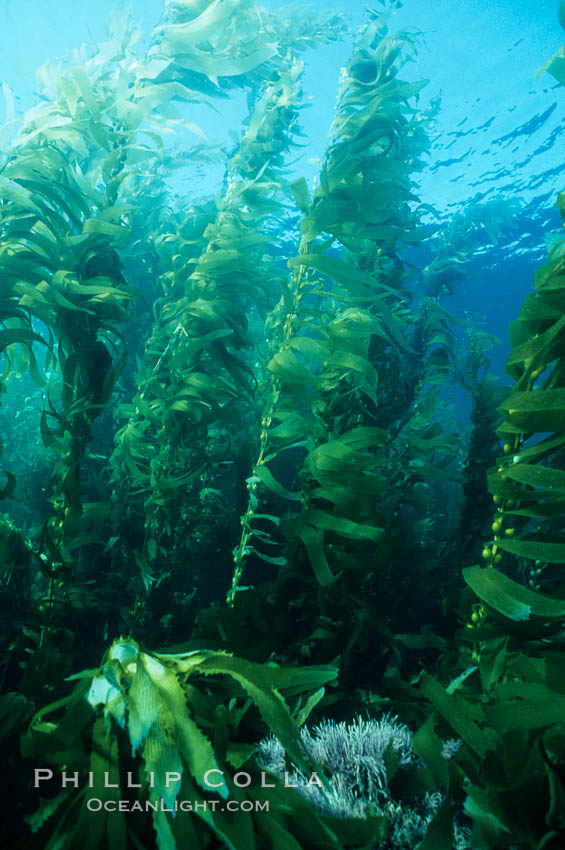
Kelp canopy.
Image ID: 02118
Species: Giant kelp, Macrocystis pyrifera
Location: San Clemente Island, California, USA
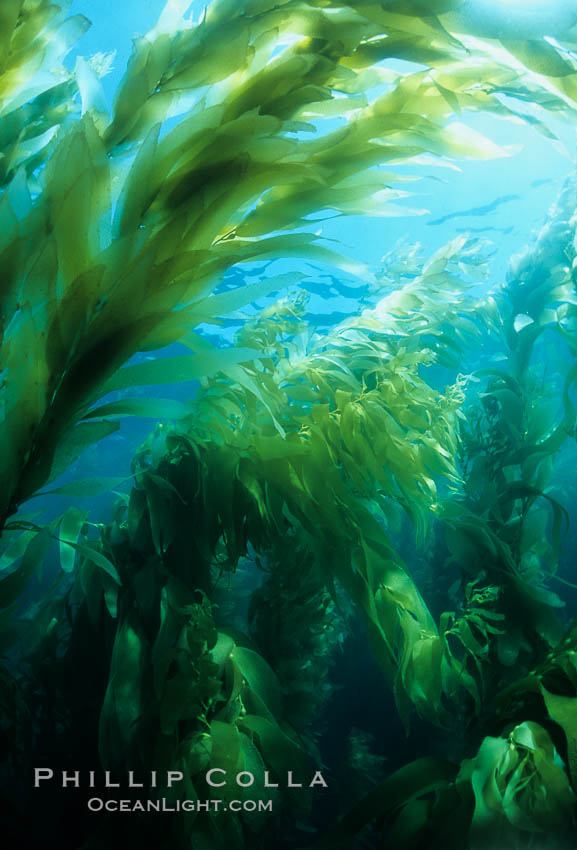
Kelp forest.
Image ID: 02409
Species: Giant kelp, Macrocystis pyrifera
Location: San Clemente Island, California, USA

Kelp bed. Giant macrocystis kelp is anchored on the ocean floor and grows to reach the ocean surface.
Image ID: 02502
Species: Giant kelp, Macrocystis pyrifera
Location: San Clemente Island, California, USA
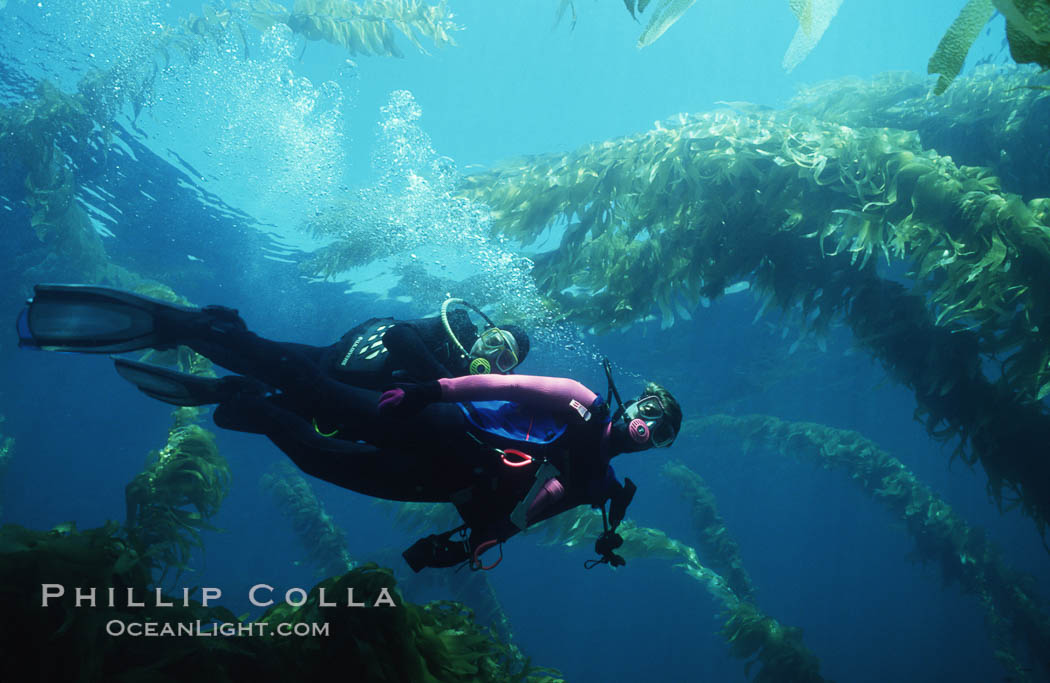
Divers and kelp forest.
Image ID: 02988
Species: Giant kelp, Macrocystis pyrifera
Location: San Clemente Island, California, USA
For more photos of the kelp forest, see http://www.oceanlight.com/html/kelp.html


