A panorama of the view from Flat Rock at sunset, viewed with your back to the sun facing the tall sandstone seacliffs that tower over Torrey Pines State Beach. This was shot from the place where yesterday’s Oranjeboom couple was standing. This panoramic photo is a composite of 10 separate photos I took by standing in one spot and spinning really fast while firing the camera on its fast motor drive. In spite of being hand-held (the best panoramas use a tripod and good technique) this particular one stitched flawlessly on the computer so that one cannot tell where one photo ends and the next begins. It is awesome in the amount of detail that it contains. If you like this you can see many more panorama photos I’ve made.
See more photos of Torrey Pines State Beach and more panoramic photos
Tracy and I went for a walk along Batiquitos Lagoon near our home in Carlsbad. This is the sunset we saw.
Here is the last shot of the San Diego city skyline, over San Diego Bay, taken about an hour after the first one and the middle one, viewed from Coronado Island:

|
San Diego city skyline at night, showing the buildings of downtown San Diego reflected in the still waters of San Diego Harbor, viewed from Coronado Island. A panoramic photograph, composite of seven separate images. San Diego, California, USA.
Image: 22254
Location: San Diego, California, USA
View this Image in Google Earth!
Pano dimensions: 5219 x 13486 |
See more of our San Diego City Skyline Panoramic Photos (or more panorama photos from places other than San Diego). They were shot with a 21 megapixel camera and consist of anywhere from four to thirteen separate frames. The amount of detail in these images is staggering, they can be printed absolutely huge! Maybe even lifesize?
We have had some mild Santa Ana winds the last few days, blowing the haze out to sea and leaving behind fantastic visibility. I went down to a few of my favorite spots around San Diego Bay to get some new photos of the San Diego city skyline, including some panoramas. Here is the first of three that I’ll post. There was a haze offshore over the ocean that turned the sunset light the color of butter:

|
San Diego city skyline, showing the buildings of downtown San Diego rising above San Diego Harbor, viewed from Point Loma at sunset, with mountains of the Cleveland National Forest rising in the distance. A panoramic photograph, composite of six separate images. San Diego, California, USA.
Image: 22252
Location: San Diego, California, USA
View this Image in Google Earth!
Pano dimensions: 3144 x 16621 |
See more of our San Diego City Skyline Panoramic Photos or more panorama photos from places other than San Diego!
Mount San Jacinto had a lot of snow over the Christmas holiday, the result of a couple of really cold storms passing through recently. Here San Jacinto is seen with some of the San Gorgonio Pass Wind Farm wind turbines (windmills) at its base.
While out in the desert for the holiday, I made a early morning drive to see San Jacinto covered by recent snow. I stopped at my favorite promontory to get a few shots of the wind turbines (wind mills). The wind was really howling through the San Gorgonio Pass this morning, but only about 20% of the turbines were spinning when I was there. Here is an assortment of wind turbines from the San Gorgonio Pass Wind Farm, with Mount San Gorgonio covered in snow in the distance.
Have you ever seen those layers of blue, purple and pink along the horizon just before sunrise? The darker sky, lowest on the horizon, is actually the shadow of the Earth cast upon the atmosphere, while the lighter sky above is the atmosphere as it is lit by the sun. As dawn nears, the shadowed portion of the sky is squeezed down on the horizon and disappears. The pink in the upper “layer” is the result of the sun passing at a highly oblique angle through the dust-filled atmosphere to the east, colored by the particulate suspended in the air.
I got a new camera that is rumored to have very good low light performance. So I took it out last night to test it on the Milky Way Galaxy. While the skies were not as clear as I would have liked, I did get a sense for how it will work for night photos. It should be pretty good on evenings with clear skies and good seeing.
I went down to La Jolla last week to check out the brown pelicans (Pelecanus occidentalis californicus). There is a fence blocking access to the cliffs now, which is unfortunate and a real shame. When I was going to UCSD (many years ago) we would leap into the ocean from these same cliffs. Alas, no longer, thanks to politicians and/or lawyers who have decided they know what is best for us and the birds. Anyway, the pelicans are starting to change into their winter breeding colors. I saw quite a few sporting a red gular throat pouch, a good sign, but I did not see many with well-developed chestnut neck color yet. Probably in January.
See our Guide to Photographing Pelicans in La Jolla.

|
Brown pelican in flight. The wingspan of the brown pelican is over 7 feet wide. The California race of the brown pelican holds endangered species status. In winter months, breeding adults assume a dramatic plumage. La Jolla, California, USA.
Image: 22142
Species: Pelecanus occidentalis, Pelecanus occidentalis californicus
Location: La Jolla, California, USA
View this Image in Google Earth!
|

|
A brown pelican preening, reaching with its beak to the uropygial gland (preen gland) near the base of its tail. Preen oil from the uropygial gland is spread by the pelican’s beak and back of its head to all other feathers on the pelican, helping to keep them water resistant and dry. La Jolla, California, USA.
Image: 22144
Species: Pelecanus occidentalis, Pelecanus occidentalis californicus
Location: La Jolla, California, USA
View this Image in Google Earth!
|

|
Brown pelican. This large seabird has a wingspan over 7 feet wide. The California race of the brown pelican holds endangered species status, due largely to predation in the early 1900s and to decades of poor reproduction caused by DDT poisoning. In winter months, breeding adults assume a dramatic plumage with brown neck, yellow and white head and bright red gular throat pouch. La Jolla, California, USA.
Image: 22145
Species: Pelecanus occidentalis, Pelecanus occidentalis californicus
Location: La Jolla, California, USA
View this Image in Google Earth!
|
See more brown pelican photos.
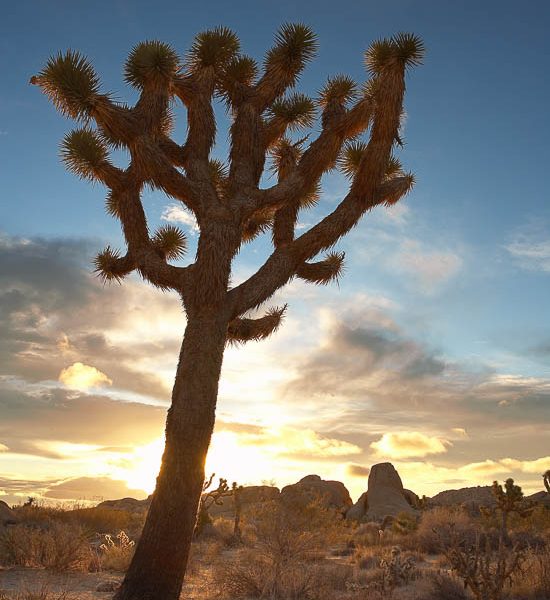
On Thanksgiving morning I made a quick sunrise run into Joshua Tree National Park. Fortunately the Starbucks near my mom’s in La Quinta opens at 5am so I was fully caffeinated for the drive. I got into my favorite part of the park about 45 minutes before sunrise, parked and walked for a while away from the road. It was very still. The only sounds I heard were a few birds and a distant rock fall. I took this photo just as the sun peeked above the distant hills.
See more Joshua Tree National Park photos.
Check out our selection of sea otter stock photos.
The sea otter (Enhydra lutris) is found along the coasts of the northeastern Pacific ocean. Sea otters are marine mammals. Adult sea otters weigh about 30 to 100 lb. Sea otters are the largest species in the weasel family, but are considered the smallest of the marine mammals. Unlike most marine mammals who rely on thick blubber, the sea otter’s insulation comes from thick fur which is the densest fur in the animal kingdom. Sea otters inhabit nearshore environments where they dive and forage for food along the sea floor. Sea otters prey upon marine invertebrates including sea urchins, molluscs and crustaceans. Occasionally sea otters will consume fish. The foraging and eating habits of the sea otter are significant in several ways. First, sea otters use of rocks to open shells, meaning sea otters are one of the few mammal species to use tools. In most of its range, the sea otter’s presence serves to control sea urchin populations which, if left unchecked, would grow to levels damaging to kelp forest ecosystems. Notably, the sea otter preys upon certain animals (abalone, urchin) that are valued by humans as food, leading to conflicts between sea otters and fisheries.
Sea otter populations were once estimated to be between 150,000–300,000. Sea otters were heavily hunted in the 1700’s and 1800’s for their fur, leading to a decline in the world population to as few as an estimated 1,000–2,000 otters. A ban on hunting sea otters was initiated which, along with conservation efforts and reintroduction programs, led to a rebound in the population which now spans about 2/3 of its original range. The sea otter is still considered an endangered species.
Hit the water this morning at 7am. Full sun, deep blue sky, not a cloud, mild warm offshore breezes, glassy sea, small but fun waves. Went for a walk with my daughter at Moonlight Beach at sunset tonight, deep orange-red sky, not a cloud, mild warm offshore breezes, glassy sea, small but fun waves. Get the picture? While much of the country is dealing with snow, rain, or just plain miserable cold, it is nearly idyllic here.

|
Moonlight Beach at sunset. Moonlight Beach, Encinitas, California, USA.
Image: 21793
Location: Moonlight Beach, Encinitas, California, USA
View this Image in Google Earth!
|

|
Moonlight Beach at sunset. Moonlight Beach, Encinitas, California, USA.
Image: 21794
Location: Moonlight Beach, Encinitas, California, USA
View this Image in Google Earth!
|
We came to Monterey packing some serious photo schwag to photograph the otters. Between Jon and I, we had two 50Ds and at least one each of 5D, 1DIIN, 1DsII, 300/2.8, 400/DO and 500/4 lenses, plus a nice medium format film rig. This sea otter (Enhydra lutris) was nevertheless quite unimpressed.
See more of our sea otter photos
When I visit Monterey I always make a stop by the Monterey Bay Aquarium. Always. My kids love it, and I can get a better look at some of the undersea life by visiting the aquarium than if I went to the hassle of actually diving. (I used to dive in the cold waters of Monterey, but am now a wuss and … you get the picture.) The Monterey Bay Aquarium is one of the finest aquariums in the country. This sea nettle jellyfish (Chrysaora fuscescens) is beautifully lit in one of the Outer Bay jellyfish tanks at the Monterey Bay Aquarium.
I made this shot using some tricks I know for making good photos in an aquarium setting, hand held with no flash.
See more of our jellyfish photos
A great egret (Ardea alba) stands on a floating patch of kelp, picking fish out of the water that are unfortunate enough to swim too close. Monterey’s famous Cannery Row stands in the background.

|
Great egret catches a fish while standing on floating kelp in front of Cannery Row buildings, along the Monterey waterfront, early morning. Monterey, California, USA.
Image: 21554
Species: Ardea alba
Location: Monterey, California, USA |
Here is one of the cuter sea otters (Enhydra lutris) I managed to photograph in Monterey recently. After shooting one afternoon’s worth of otters, both Jon and I decided that it was not worth spending time taking pictures of the dark-faced otters — their deep brown fur made it tough to get an appealing exposure without blowing out the background. So, like guys are wont to do the world over, we focused our attention entirely on the blondes. Seen in this photo is “Paris,” known for her vacant expression and vacuous intellect.* As one would expect, the blond otters made for the best photos, something about having been to modeling school and having a good surgeon.

|
A sea otter, resting on its back, holding its paw out of the water for warmth. While the sea otter has extremely dense fur on its body, the fur is less dense on its head, arms and paws so it will hold these out of the cold water to conserve body heat. Elkhorn Slough National Estuarine Research Reserve, Moss Landing, California, USA.
Image: 21602
Species: Enhydra lutris
Location: Elkhorn Slough National Estuarine Research Reserve, Moss Landing, California, USA
View this Image in Google Earth!
|
See more of our sea otter photos.
* The astute observer will note that this otter, being male**, technically should not be named Paris. Good point, we’ll call him Jessica.
** If you are not able to identify this otter as a male, then go here to get the info.
I was recently up in Monterey to join Jon Cornforth trying to photograph sea otters (Enhydra lutris). We saw a few. In this photo, Casanova (the male sea otter on the left) is holding his lady friend (the female, inverted on the right, apparently not enjoying it) by HER NOSE as he mates with her. It is brutal, yes, but it is standard otter fare. Male sea otters usually mate with females in this manner, so much so that females can usually be identified by their scarred and wounded noses.

|
Sea otters mating. The male holds the female’s head or nose with his jaws during copulation. Visible scars are often present on females from this behavior. Sea otters have a polygynous mating system. Males actively defend territories and will mate with females that inhabit their territory or seek out females in estrus if no territory is established. Males and females typically bond for the duration of estrus, or about 3 days. Elkhorn Slough National Estuarine Research Reserve, Moss Landing, California, USA.
Image: 21606
Species: Enhydra lutris
Location: Elkhorn Slough National Estuarine Research Reserve, Moss Landing, California, USA |
See more of our sea otter photos.
What’s with the title of this post, you might wonder? Strangely, an earlier post of mine entitled “Rough Sex” has become one of the most popular posts on this site. So I thought I would do a little shameless SEO and use the technique again hoping for more visitors.
Here is a shot of South Island, part of the Coronado Islands (Islas Coronado) not far from San Diego and Tijuana, just south of the border.
Here is a shot of Middle Island, part of the Coronado Islands (Islas Coronado) not far from San Diego and Tijuana, just south of the border. Partially obscured by Middle Island is “Middle Rock”, to the left and behind.